Brain Cancer Research
Glioblastoma Cancer
The aggressive brain tumor — and the infection questions science is beginning to ask
Glioblastoma (glioblastoma multiforme, or GBM) is the most common and most aggressive malignant primary brain tumor in adults. Standard care — surgery, chemotherapy (temozolomide), and radiation — extends survival but is rarely curative, and the questions patients are left with are enormous. The Parasite-Cancer Connection by James Young, RN examines science that mainstream oncology rarely discusses: how chronic infection, neuroinflammation, and parasites such as Toxoplasma gondii — which establishes lifelong latent infection in brain tissue — may intersect with the tumor microenvironment. This is educational information, not medical advice; the goal is to help you ask better, more informed questions.
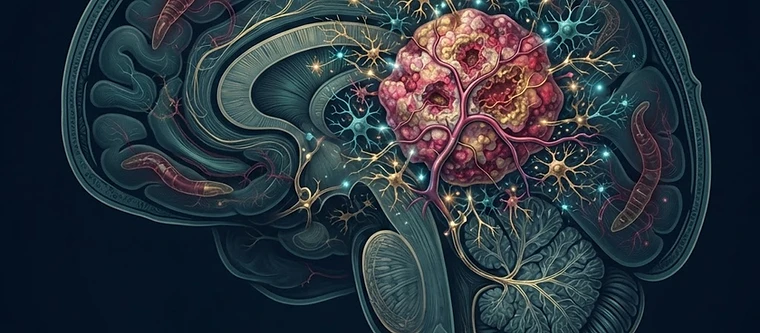
The Science
What glioblastoma is — and the infection questions researchers are asking
Glioblastoma is a grade IV astrocytoma: a fast-growing, highly infiltrative tumor that weaves itself into healthy brain tissue, making complete surgical removal almost impossible. It thrives in an inflammation-rich, immune-suppressed microenvironment, and its cells are notoriously adaptable — which is one reason treatment resistance is so common. Current therapy buys time but does not usually cure, and patients are right to ask what else is driving this disease.
Researchers are increasingly investigating whether chronic infections and parasitic organisms play a role in brain tumor biology. Toxoplasma gondii, a parasite carried by roughly a third of the global population, forms dormant cysts in neural tissue and is known to modulate host-cell signaling, dopamine, apoptosis, and immune responses — some of the same pathways glioblastoma exploits. The connection is not proven as a cause, and no one should abandon conventional care. But the questions are legitimate, growing, and reviewed in depth in The Parasite-Cancer Connection so you can discuss them with your care team.
Questions and clinical context to discuss with your care team
These points are provided as educational context for informed discussion with qualified healthcare professionals. They are not evidence that a parasite caused a cancer or other condition.
- A new glioblastoma diagnosis and questions about what contributed to it
- Persistent headaches, seizures, or pressure symptoms that led to the diagnosis
- Cognitive, speech, or personality changes around the tumor
- Rapid progression or recurrence after standard treatment
- A desire to understand inflammation and immune factors your doctor hasn't mentioned
- Questions about whether chronic infection deserves investigation alongside oncology care
What this book covers
- What glioblastoma is, how it grows, and why it resists treatment.
- The inflammation-rich tumor microenvironment and why it matters.
- Toxoplasma gondii's lifelong presence in brain tissue and its effects on host-cell signaling.
- How parasitic modulation of apoptosis and immunity overlaps with tumor biology.
- The difference between an emerging hypothesis and a proven cause — and why both matter.
- The questions to bring to your oncologist so you can make informed decisions.
Related Research
Read the supporting research
These focused articles expand on specific mechanisms, diagnostic distinctions, and documented research related to this topic.
Common Questions
Glioblastoma Cancer — your questions answered
Stop guessing. Get the research.
The Parasite-Disease Connection by James Young, RN walks you through the evidence, the mechanisms, and the conversations to have with your doctor — so you can stop chasing symptoms and start asking the right questions.
Educational information only — not a substitute for diagnosis or treatment by a qualified healthcare professional.