Exploring the Link Between Blood Cancer and Parasites
Could microscopic organisms play a role in hematological health? We explore the emerging scientific discourse surrounding the connection between blood cancer and parasites.
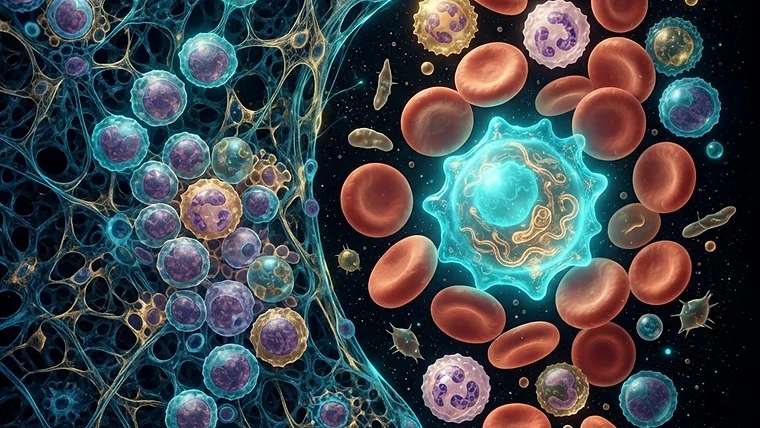
Evidence context
This article is an educational research review. Associations do not prove causation, and medical decisions should be made with qualified healthcare professionals using the underlying cited evidence.
Topic overview
Cancer and parasites research overviewIntroduction to a Complex Biological Mystery
In the vast field of oncology, researchers are constantly looking for the hidden drivers of cellular transformation. While standard models often focus on genetic mutations and environmental toxins, a quiet but persistent area of academic inquiry examines the role of microbial and parasitic influence on the immune system. One intriguing topic involves the intersection of blood cancer and parasites. As science advances, the dialogue around how chronic infections, inflammation, and host-parasite interactions might relate to hematological disorders has become increasingly sophisticated. This article explores the scientific landscape regarding these associations, strictly for educational purposes, and emphasizes that any concerns about personal health should be discussed directly with an oncology team.
Understanding Hematological Malignancies
Blood cancers—such as leukemia, lymphoma, and multiple myeloma—affect the production and function of blood cells. Typically, these conditions arise when blood cells undergo genetic changes that cause them to grow uncontrollably. However, researchers are investigating whether these genetic errors could be exacerbated or triggered by persistent environmental stressors, including the presence of intracellular organisms. The study of blood cancer and parasites is not about suggesting a singular cause, but rather about understanding the 'micro-environment' of the bone marrow and how foreign pathogens might disrupt normal cellular signaling.
The Role of Chronic Inflammation
Chronic inflammation is a known hallmark of many systemic health issues. When the immune system is in a state of constant activation—a scenario often observed when the body struggles to eliminate a persistent parasitic infection—the bone marrow may become a site of significant biological stress. Some studies indicate that this persistent 'alert state' might influence the maturation of blood cells. If the body is fighting a long-term low-grade infection, the chemical messengers (cytokines) involved in the immune response may inadvertently contribute to an environment where abnormal cell division is more likely to occur. It is important to note that these observations do not establish causation, but they do form a compelling basis for further investigation into the relationship between blood cancer and parasites.
Mechanisms of Immune Modulation
Parasites have evolved sophisticated ways to evade the human immune system. Some organisms are capable of modulating the host’s immune response to ensure their own survival. This immunosuppression or immune-dysregulation can have secondary consequences. If the immune system is diverted or suppressed by a parasitic load, its ability to perform 'immune surveillance'—the process of identifying and clearing rogue, potentially cancerous cells—may be diminished. This interaction suggests that the presence of parasites might change the 'threshold' at which blood cells become malignant. This is a burgeoning field of study that researchers are exploring to better understand the systemic vulnerabilities that precede hematological diagnoses.
Potential Biological Correlations
While direct links remain complex and are not fully understood, there are several theoretical pathways that researchers examine when looking at blood cancer and parasites. These include:
- Direct mechanical stress on hematopoiesis (the formation of blood cells) within the bone marrow.
- Metabolic competition, where parasites deplete essential nutrients needed for healthy blood cell maintenance.
- Genetic instability induced by chronic infection-related oxidative stress.
- Altered signaling pathways that prevent programmed cell death (apoptosis) in mutated cells.
Navigating Conventional Medical Care
When faced with a diagnosis of blood cancer, patients are typically offered standard treatments such as chemotherapy, radiation, or targeted therapies. These interventions are designed to aggressively address malignancy, but it is a scientific reality that they also affect healthy tissues and the broader immune architecture. Patients should always engage in open, detailed discussions with their medical team regarding the benefits and limitations of their care plan. Understanding the nuances of treatment is essential, and no patient should abandon or delay standard medical protocols. The goal of this educational overview is simply to provide a broader context of the research landscape; it is not a recommendation for alternative approaches or an endorsement of any unverified treatment methods.
The Difficulty of Detection
One reason that research into blood cancer and parasites remains challenging is that parasitic infections can be notoriously difficult to detect with standard diagnostic tools. Many parasites reside in tissues rather than in the bloodstream, or they exist in states of dormancy that evade routine screening. Furthermore, the symptoms of parasitic infection often mimic other conditions, leading to potential gaps in clinical data. As molecular diagnostics improve, researchers hope to gain a clearer picture of how these organisms may coexist with hematological malignancies and what, if any, role they play in the progression of the disease.
Looking Ahead at Emerging Science
Future research is likely to focus on the 'microbiome' of the blood and bone marrow. We are beginning to understand that our bodies are far more than just human cells; we are ecosystems. As we learn more about how foreign entities influence our internal environment, the conversation surrounding blood cancer and parasites will undoubtedly grow more nuanced. Scientists are utilizing high-throughput sequencing and advanced imaging to see if there are consistent patterns that link specific parasitic burdens to hematological health outcomes. This ongoing work is vital for a holistic understanding of how we might better protect our internal health.
A Note on Educational Responsibility
It is vital to reiterate that this content is for educational purposes only. It is not medical advice, diagnosis, or treatment. The associations discussed here are the subject of ongoing scientific inquiry and should not be interpreted as evidence that parasites are a primary cause of cancer or that they can be treated as such. Always consult with a licensed oncologist or medical professional before making any health decisions. By staying informed and engaging in rigorous scientific discourse, we can better advocate for our health and understand the complex systems that maintain it.
Going Deeper
If you are interested in exploring the foundational research behind these topics, you can learn more by visiting the main cancer and parasites guide. For those looking for a comprehensive overview written for the layperson, the book "The Parasite-Cancer Connection" by James Young, RN, serves as an essential resource that provides further context on the historical and scientific observations surrounding this subject matter. Exploring these resources can help provide a more rounded understanding of the complex biological questions being investigated today.
Frequently asked questions
Are parasites a proven cause of blood cancer?
No. While research investigates the associations between blood cancer and parasites, there is no scientific consensus that parasites cause cancer. Current findings are based on observation and theoretical biological mechanisms, not direct causation.
Can I test for parasites to explain a blood cancer diagnosis?
Standard diagnostic tests for cancer and those for parasitic infections are very different. If you have concerns, it is best to discuss them with your oncologist, who can determine if any additional diagnostic testing is relevant or appropriate for your specific clinical picture.
Should I try to treat parasites if I have blood cancer?
You should never attempt to treat yourself for parasites while undergoing cancer treatment without the direct, explicit approval of your oncologist. Certain antiparasitic treatments can interact negatively with chemotherapy or radiation, and it is crucial that your medical team oversees every aspect of your care.
How do I discuss this research with my doctor?
It is best to bring your questions directly to your oncology team. You might say, 'I have been reading about the emerging research on environmental factors and blood health; what is your perspective on the role of immune-modulating infections in the context of my treatment plan?'