Brain Cancer and Parasites: Exploring Emerging Research
Could there be an unexpected link between neurological health and parasitic activity? We explore the complex, emerging research regarding brain cancer and parasites.
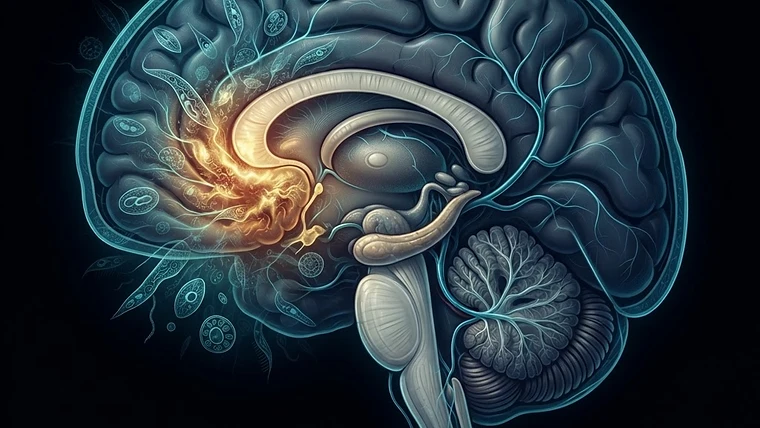
Evidence context
This article is an educational research review. Associations do not prove causation, and medical decisions should be made with qualified healthcare professionals using the underlying cited evidence.
Topic overview
Glioblastoma cancer research overviewThe intersection of microbiology and oncology has long fascinated researchers. Among the most intriguing and debated topics in this field is the relationship between brain cancer and parasites. While the primary understanding of tumors often focuses on genetic mutations and environmental factors, a growing subset of scientific inquiry is asking whether pathogenic organisms, including certain parasites, might play a more complex role in the microenvironment of the brain. It is important to note that this content is for educational purposes only and is not medical advice. Readers should always consult with their healthcare professionals regarding any health concerns or symptoms. Understanding the connection between brain cancer and parasites requires a deep dive into how biological organisms interact with the human immune system and the central nervous system. Historically, medicine has looked at these two areas—neurological malignancies and infectious diseases—as separate domains. However, emerging science explores the possibility of a 'pathobiont' model, where the presence of certain microorganisms could potentially influence cellular behavior in ways that scientists are only beginning to categorize. When we discuss brain cancer and parasites, we are not suggesting that a single parasite acts as a sole causative agent. Instead, researchers are investigating whether chronic, low-level parasitic activity might create an inflammatory landscape that affects how brain cells replicate. The brain is an immune-privileged site, yet it remains susceptible to various infections. If a parasite is present, it may alter the local environment, potentially impacting the behavior of neighboring cells. Standard medical care for brain tumors often involves surgery, chemotherapy, or radiation. It is vital to recognize that these conventional treatments are designed to target rapidly dividing cells. Because these treatments can affect both healthy and diseased tissues, patients and their oncology teams must engage in thorough discussions regarding the specific trade-offs and options available to them. Never delay or abandon standard medical care in favor of unverified theories. Research into the link between brain cancer and parasites is still in its infancy and should be treated as an ongoing academic pursuit rather than a settled medical fact. One of the primary reasons this subject is gaining traction in scientific literature is the role of inflammation. Chronic inflammation is a known hallmark of many cancers, regardless of their location. Certain parasites are well-known for their ability to hide from the immune system, inducing a state of long-term inflammation. When this occurs within the delicate structure of the brain, the resulting immune response may be significantly different than in other parts of the body. Some studies indicate that the presence of specific proteins or antigens associated with parasitic infections may coincide with tumor sites. However, these associations do not prove causation. Correlation is not synonymous with cause-and-effect, and science requires rigorous testing to determine if one factor leads to another or if they are simply present simultaneously by chance. Exploring the microscopic environment of a tumor reveals a complex ecosystem of interactions. Scientists are looking at how parasites might alter the host's signaling pathways. In the context of brain cancer and parasites, researchers are particularly interested in the following areas: • Changes in metabolic pathways that might favor tumor cell survival. • The potential for parasitic enzymes to interact with host DNA repair mechanisms. • Alterations in the blood-brain barrier that could theoretically facilitate the movement of other pathogens. • The modulation of local cytokines and growth factors that influence tissue repair and cellular proliferation. Understanding these mechanisms is difficult, especially given the density of the brain's neural network. Diagnostic challenges also complicate the research. Detecting a parasitic presence in the brain is often difficult because many parasites have sophisticated methods of evasion. Advanced imaging and biopsy techniques are required, and even then, results can be ambiguous. Furthermore, many people may carry low levels of parasites without ever developing tumors, suggesting that if a link exists, it likely involves a combination of host genetics, immune status, and parasitic strain. It is critical to maintain a balanced perspective. While the investigation into brain cancer and parasites provides a new lens through which to view oncology, it remains an evolving field. The complexity of the human brain means that any influence by an external organism would have to be analyzed in the context of thousands of other biological variables. Researchers urge caution, emphasizing that scientific consensus is built on decades of peer-reviewed data and large-scale clinical trials. Moving forward, the scientific community is likely to focus on better screening methods for pathogens in patients with neurological symptoms. By improving our ability to detect both malignancies and potential infections, we can better understand the full clinical picture of a patient's health. For those navigating an oncology diagnosis, the focus should remain on the evidence-based treatments provided by neuro-oncologists. Discussing the full spectrum of your symptoms with your medical team ensures that no stone is left unturned, including the potential for underlying infections that might exacerbate neurological health. In conclusion, the study of brain cancer and parasites remains a frontier in modern medicine. It reminds us that the human body is an interconnected system where various biological entities may interact in ways we are only beginning to grasp. As research continues, maintaining an evidence-based approach is essential. Stay informed, engage in open dialogue with your healthcare providers, and follow the progress of clinical literature with a critical eye, ensuring that all decisions about health care remain anchored in professional, verified medical guidance.
Going deeper
If you want the full picture of how parasitic infection, chronic inflammation, and immune function may shape cancer risk, explore the main cancer and parasites guide. James Young, RN's book "The Parasite-Cancer Connection" goes far deeper into the research behind every question raised in this article.
Frequently asked questions
Is it proven that parasites cause brain cancer?
No. There is currently no definitive scientific proof that parasites cause brain cancer. While some research explores potential associations, these findings are preliminary and do not establish a direct causal link.
Should I test for parasites if I have a brain tumor?
Any diagnostic testing should be discussed with your oncologist or neurologist. They are best equipped to determine which tests are relevant to your specific medical situation and care plan.
Can parasitic medication cure brain cancer?
No. Parasitic medications are designed to treat specific infectious diseases. They are not authorized or indicated as a treatment for brain cancer. Never abandon your prescribed cancer treatments in favor of unverified alternative therapies.