Pancreatic Cancer and Parasites: Exploring Emerging Research
Could there be an underlying link between pancreatic cancer and parasites? We explore the intersection of parasitic infections and oncology research.
Evidence context
This article is an educational research review. Associations do not prove causation, and medical decisions should be made with qualified healthcare professionals using the underlying cited evidence.
Topic overview
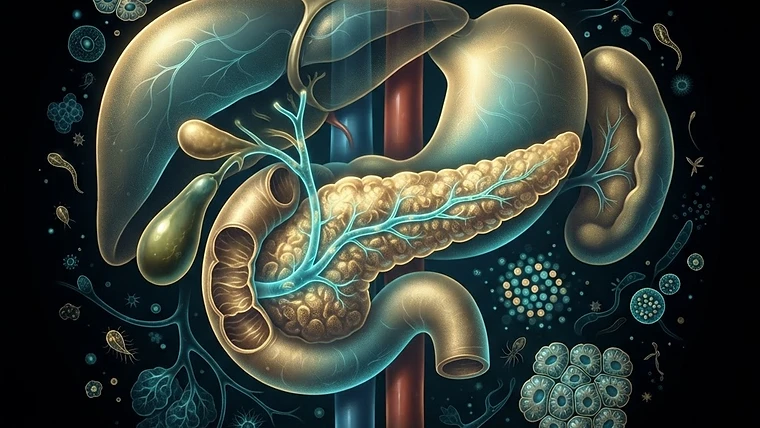
Cancer and parasites research overviewThe intersection of biological systems is a burgeoning field in modern science. Among the most intriguing and debated topics is the potential relationship between pancreatic cancer and parasites. As researchers look deeper into the complex micro-environment of the human pancreas, they are beginning to consider how external biological agents—including various helminths and protozoa—might interact with tissues and immune responses. This article provides an educational overview of this complex subject, framing the current state of scientific inquiry while emphasizing that associations observed in laboratory settings do not necessarily imply direct causation or clinical outcomes for human patients. It is critical to note that this content is for educational purposes only and is not medical advice. Always consult with your oncology team regarding your health. The pancreas is an organ of immense complexity, responsible for critical endocrine and exocrine functions. When cells within this organ begin to divide uncontrollably, the result is pancreatic cancer, a condition often characterized by its aggressive nature and the challenging landscape of its micro-environment. Conventional medical approaches, including chemotherapy, radiation, and surgical intervention, are designed to target and neutralize rapidly dividing cells. However, these treatments can affect both healthy and diseased tissues, prompting researchers to seek a broader understanding of the factors that might influence how cancer develops and progresses. This is where the investigation into pancreatic cancer and parasites becomes a focal point for researchers who study chronic inflammation and host-pathogen interactions. Historically, parasitology and oncology were viewed as distinct fields. However, the discovery that certain pathogens can induce chronic inflammatory responses has led scientists to wonder if such long-term stress on an organ could create a permissive environment for cellular dysregulation. Chronic inflammation is widely recognized as a catalyst for tissue damage and cellular stress, both of which are common precursors to the development of pathological conditions. In the context of pancreatic cancer and parasites, scientists are exploring whether the presence of parasitic organisms might inadvertently signal immune pathways or metabolic changes that affect pancreatic ductal cells. One key area of focus is the concept of immune evasion and modulation. Many parasites have evolved sophisticated mechanisms to remain undetected by the host immune system. By studying how these organisms alter immune signaling, researchers are gaining insights into how similar mechanisms might be employed by tumor cells to evade destruction. The research into pancreatic cancer and parasites is still in its infancy, often relying on animal models or small-scale laboratory observations. These studies serve as a bridge to understanding, but they must be interpreted with caution. A common hypothesis suggests that the physical or chemical presence of parasites could induce an environment of oxidative stress. Oxidative stress, when prolonged, is known to damage cellular DNA, which is a fundamental requirement for the development of mutations that may lead to uncontrolled cellular growth. The relationship between pancreatic cancer and parasites involves several potential mechanisms: * Chronic tissue irritation: Parasitic life cycles that involve the migration through or residence in the biliary or pancreatic ducts may cause persistent physical irritation. * Immune system shifts: Parasitic infections often induce a Th2-skewed immune response, which is distinctly different from the typical Th1-mediated anti-tumor response. * Microbiome alteration: The presence of non-commensal organisms can shift the local microbiome, potentially impacting the production of metabolites that protect or damage pancreatic cells. * Metabolic reprogramming: Some pathogens alter host metabolism, potentially providing nutritional advantages to rapidly dividing cell populations. While these points provide a framework for research, it is vital to emphasize that the presence of a parasite does not guarantee disease development. Human health is governed by a multitude of factors, including genetics, environment, diet, and overall immune health. Oncology treatments such as chemotherapy and radiation are standard of care for a reason, as they have been rigorously tested to manage the physical manifestations of cancer. Patients currently undergoing these treatments should never alter their care plan based on independent research. Open communication with one's oncology team is the most effective way to navigate the trade-offs of modern treatment options while staying informed about emerging scientific theories. As we look at the future of this field, the integration of multi-disciplinary studies will be essential. By combining the expertise of gastroenterologists, parasitologists, and oncologists, the medical community may one day clarify the extent to which environmental or biological stressors influence pancreatic outcomes. The goal is not to find simple answers to complex problems but to map the intricate biological reality of the human body. As this science matures, we may find that the link between pancreatic cancer and parasites is just one piece of a much larger puzzle involving the human host and its complex relationship with the microscopic world. The journey of scientific discovery is iterative, requiring patience and a commitment to data that meets high standards of clinical validity. By maintaining a focus on peer-reviewed evidence and rigorous methodology, the scientific community continues to move forward in its search for better outcomes and a deeper understanding of the factors that shape our health and longevity. ## Going deeper While the research into the connection between pancreatic cancer and parasites remains a frontier in modern science, those looking to educate themselves further on the broader implications of these biological associations can explore the main cancer and parasites guide. For a comprehensive look at the historical and current perspectives on this topic, the book "The Parasite-Cancer Connection" by James Young, RN, serves as a detailed resource for those interested in the literature surrounding these complex, emerging concepts.
Frequently asked questions
Is there a known link between pancreatic cancer and parasites?
Current research is investigating potential associations between chronic parasitic infections and tissue inflammation, but a direct causal link between pancreatic cancer and parasites has not been established in clinical settings.
Should I be tested for parasites if I have pancreatic cancer?
Diagnostic testing should always be directed by your primary oncology team, who will determine the appropriate screening protocols based on your specific clinical presentation and medical history.
Can parasitic infections be the sole cause of pancreatic tumors?
No, scientific literature does not support the idea that parasites are the sole cause of pancreatic cancer. Oncology is a complex field involving genetics, environmental factors, and lifestyle, where multi-factorial causes are the norm.
Does treating parasites help with cancer outcomes?
There is no clinical evidence suggesting that treating parasitic infections serves as a replacement for standard oncological treatments like chemotherapy or surgery. Always discuss any potential new interventions with your medical provider.