Parasites, Gut-Brain Axis, and Metabolic Disease
Emerging science reveals how intestinal parasites, gut microbiota dysbiosis, and chronic inflammation intersect to influence metabolic syndrome, insulin resistance, and mood disorders.
Evidence context
This article is an educational research review. Associations do not prove causation, and medical decisions should be made with qualified healthcare professionals using the underlying cited evidence.
Topic overview
Cancer and parasites research overviewFor decades, medicine tended to place health conditions into neatly divided silos. Infectious diseases occupied one department, metabolic disorders like type 2 diabetes belonged to endocrinology, and mood disturbances such as anxiety, depression, and persistent brain fog fell strictly under neuropsychiatry. However, an explosion of research across immunometabolism and the gut-brain axis is dissolving these artificial boundaries.
Scientists are increasingly uncovering a shared biological undercurrent connecting chronic ailments: low-grade, persistent inflammation accompanied by immune dysregulation. Within this evolving framework, an intriguing question has moved to the scientific forefront: How do chronic parasitic exposures alter the gut ecosystem, fuel systemic inflammation, and shape metabolic and neurological health?
Emerging research indicates that the presence of parasites—whether microscopic protozoans or complex helminths—can dramatically reshape host physiology. Rather than acting purely as localized pathogens, these organisms interact deeply with the human microbiome, alter intestinal barrier integrity, and trigger signaling cascades that ripple outward into metabolic tissues and the central nervous system.
The New Science of Immunometabolism: Metaflammation and Insulin Resistance
Metabolic health has traditionally been viewed through the lens of caloric excess and physical inactivity. Yet researchers now recognize that metabolic syndrome, obesity, and type 2 diabetes are sustained by a distinct biological state termed “metaflammation”—chronic, low-grade metabolic inflammation driven by immune system activation within metabolic tissues such as visceral fat, the liver, and skeletal muscle.
When adipose tissue expands or suffers biological stress, local immune populations shift. Normally, anti-inflammatory M2 macrophages and regulatory T cells maintain tissue tranquility and preserve healthy insulin sensitivity. In metabolic syndrome, however, this balance collapses. Pro-inflammatory M1 macrophages accumulate, releasing an ongoing surge of cytokines, including tumor necrosis factor-alpha (TNF-α), interleukin-6 (IL-6), and interleukin-1 beta (IL-1β). These circulating chemical messengers interfere directly with cellular insulin receptor signaling pathways, gradually giving rise to insulin resistance.
The Double-Edged Role of Parasites in Host Metabolism
Where do parasites fit into this metabolic equation? Recent systematic reviews and epidemiological investigations, such as studies compiled in the PMC systematic review on intestinal parasites and diabetes, highlight a complex, multifaceted relationship between parasitic infections and host glucose regulation.
- The Compounding Toll of Chronic Protozoan Infections: Pathogenic protozoans (such as Giardia duodenalis, Entamoeba histolytica, or systemic organisms like Toxoplasma gondii) frequently elicit aggressive Th1- and Th17-skewed inflammatory responses. Chronic gut barrier irritation and endotoxemia driven by these organisms can elevate circulating inflammatory cytokines, potentially compounding the metaflammation that accelerates beta-cell dysfunction and worsens insulin resistance.
- The Helminth Conundrum: In contrast, certain parasitic helminths (such as roundworms or schistosomes) have evolved to suppress hyper-inflammatory responses to ensure their long-term survival in the host. As reviewed in Trends in Parasitology, helminths often polarize the immune system toward a modified Th2 and regulatory T cell (Treg) response, promoting alternative M2 macrophage activation. In laboratory models, helminth-derived molecules have surprisingly attenuated high-fat diet-induced weight gain, improved glucose handling, and reduced adipose tissue inflammation.
This paradoxical contrast demonstrates that parasites are not simple, monolithic invaders; they are powerful biological modulators capable of shifting the host's metabolic dial in radically different directions depending on species, host genetics, and microbial context.
The Gut-Brain Axis: How Intestinal Infection Reaches the Mind
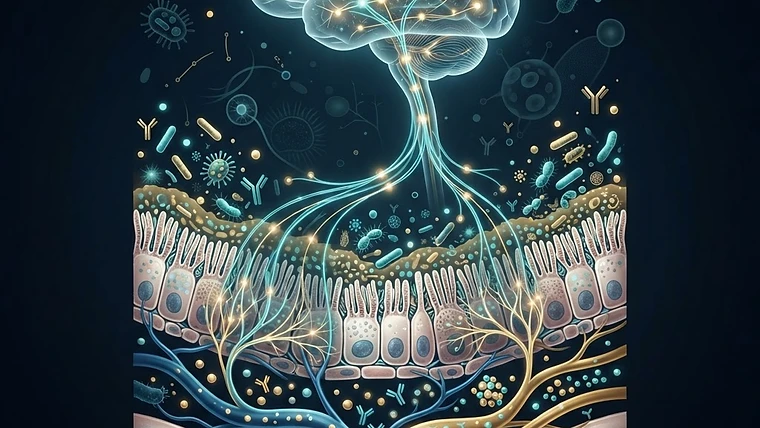
Just as chronic parasitic exposure can influence metabolic tissues, evidence shows it can exert profound effects on the central nervous system. The gut-brain axis serves as a bidirectional superhighway connecting intestinal biology to brain function through four primary avenues:
- The Vagus Nerve: Providing direct neural communication between the enteric nervous system and the brainstem.
- Circulating Immune Cytokines: Signaling molecules that can cross or alter the permeability of the blood-brain barrier (BBB).
- Microbial Metabolites: Short-chain fatty acids (SCFAs), secondary bile acids, and amino acid derivatives.
- Neuroendocrine Pathways: Primarily the hypothalamic-pituitary-adrenal (HPA) stress axis.
As explored in recent literature on parasite-induced immune activation and the microbiota-gut-brain axis, intestinal parasites do not need to physically breach the brain to disrupt mood, cognition, and emotional processing.
[Parasitic Challenge in Gut]
          │
          ▼
[Gut Dysbiosis + Epithelial Permeability ("Leaky Gut")]
          │
          ▼
[Translocation of Antigens / Lipopolysaccharide (LPS)]
          │
          ▼
[Systemic Cytokine Release (TNF-α, IL-6, IFN-γ)]
          │
          ├───► Metabolic Tissues (Adipose, Liver) ──► Insulin Resistance & Fatigue
          │
          ▼
[Blood-Brain Barrier Alteration + Glial Activation]
          │
          ├───► Microglial Priming & Neuroinflammation
          └───► Kynurenine Pathway Activation ──► Brain Fog, Anxiety, Depressive Mood
Gut Dysbiosis and Microbial Metabolite Disruption
Intestinal parasites reside within the dense community of the host microbiome. Research in Parasite Immunology and Frontiers in Immunology shows that chronic infection frequently destabilizes this delicate microflora, a phenomenon termed dysbiosis.
When beneficial commensal bacteria—such as Bifidobacterium and butyrate-producing Faecalibacterium—are crowded out by microbial disruption or mucosal irritation, levels of protective short-chain fatty acids (SCFAs) fall. Because SCFAs are critical for maintaining gut barrier integrity and suppressing microglial overactivity in the brain, their reduction leaves both the intestinal wall and the brain's immune defenses vulnerable.
Neuroinflammation: Unpacking Brain Fog, Anxiety, and Mood Disorders
Why do individuals struggling with chronic gut infections or metabolic dysregulation so frequently report persistent cognitive fog, exhaustion, anxiety, and depressive symptoms? Modern neurobiology points toward neuroinflammation as a central driver.
Within the brain, non-neuronal support cells called microglia and astrocytes serve as resident immune sentinels. Under normal physiological conditions, microglia actively prune inactive synapses, clear cellular debris, and produce trophic factors that support neuroplasticity. However, when primed by chronic peripheral inflammatory signals, microglia shift into an active, pro-inflammatory stance.
The Tryptophan-Kynurenine Steal
One of the most consequential biochemical mechanisms linking gut immune activation to mental health conditions involves tryptophan metabolism. As outlined in research regarding the kynurenine pathway and neuroinflammation, inflammatory cytokines—specifically interferon-gamma (IFN-γ) and TNF-α—strongly activate the enzyme indoleamine 2,3-dioxygenase (IDO-1).
Under baseline conditions, the essential amino acid tryptophan is primarily utilized to synthesize serotonin (the neurotransmitter regulating mood, sleep, and emotional resilience) and subsequent melatonin. However, when IDO-1 is hyper-activated by persistent immune challenges:
- Tryptophan is Shunted Away: The production of serotonin and melatonin drops significantly.
- Neurotoxic Byproducts Accumulate: Tryptophan is channeled into the kynurenine pathway, resulting in downstream metabolites like quinolinic acid.
- Glutamate Excitotoxicity Ensues: Quinolinic acid acts as a potent agonist at NMDA receptors in the central nervous system, promoting excitotoxicity, oxidative stress, and mitochondrial dysfunction in neurons.
This biochemical shift provides a compelling, biologically grounded explanation for how chronic infection and systemic inflammation can manifest clinically as cognitive sluggishness, anhedonia, heightened anxiety, and persistent mood disorders.
The Overlap with Autoimmunity: Molecular Mimicry and Immune Fatigue
The ripple effects of chronic parasite-host friction do not stop at metabolic syndrome and neuroinflammation. They extend deeply into the terrain of autoimmune reactivity.
When the mucosal barrier of the gastrointestinal tract is compromised, structural elements of microorganisms, parasite-derived antigens, and un-degraded food proteins can pass into the lamina propria and enter circulation. This phenomenon places the adaptive immune system on continuous high alert.
Through a process known as molecular mimicry, the immune system may inadvertently identify structural similarities between parasite surface antigens and self-peptides in host tissues. For instance, antibodies or cytotoxic T cells trained to target a foreign pathogen may cross-react with human nerve sheaths, thyroid tissue, or joint synovium. Over time, persistent antigenic stimulation combined with compromised regulatory T-cell control can foster an internal environment where self-tolerance breaks down, potentially triggering or exacerbating autoimmune conditions.
Navigating the Hypothesis: What Does the Science Mean for Us?
It is essential to emphasize that current science does not propose that parasites are the sole or universal cause of diabetes, depression, or neurodegenerative conditions. Human health is governed by a multifactorial matrix involving genetics, nutrition, environmental toxicants, lifestyle, and psychosocial stress. Furthermore, these findings represent an evolving frontier of biomedical exploration rather than an immediate blueprint for clinical self-treatment.
Nevertheless, exploring these interconnected systems underscores a vital concept: the human body operates as a unified, continuous network. A chronic inflammatory event taking place within the mucosal folds of the small intestine is never purely local. Through microbially derived metabolites, cytokine cascades, and neurochemical shunts, gut-level immune disruptions can profoundly influence how effectively your cells process glucose and how clearly your mind functions.
For readers who wish to dive deeper into the historical and cutting-edge literature examining how hidden biological burdens, pathogens, and chronic inflammatory stressors interact with long-term chronic illness, James Young, RN provides a comprehensive and accessible examination in his book The Parasite-Disease Connection.
Understanding the biological dialogue between our immune defenses, the microbiome, and foreign organisms allows science to move beyond merely managing symptomatic downstream fires—pointing toward a richer, more integrated understanding of human well-being.
Frequently Asked Questions (FAQ)
Can parasites directly cause type 2 diabetes?
Current research does not suggest that parasites directly cause type 2 diabetes on their own. Instead, scientific studies show that chronic parasitic infections can influence gut microbiota composition and trigger systemic, low-grade metabolic inflammation (metaflammation). In genetically or metabolically susceptible individuals, sustained inflammatory cytokine activity can interfere with insulin signaling, contributing to insulin resistance and complicating blood sugar management.
How can an intestinal infection affect brain health and mood?
Intestinal infections communicate with the brain primarily via the gut-brain axis. Chronic gut inflammation can disrupt the intestinal epithelial barrier, allowing inflammatory mediators to enter systemic circulation. These cytokines stimulate the vagus nerve and alter the blood-brain barrier, activating brain immune cells called microglia. Additionally, persistent inflammation shunts tryptophan away from serotonin production and into the kynurenine pathway, producing neuroactive metabolites linked to brain fog, anxiety, and depression.
What is the difference between protozoa and helminths in immune regulation?
Protozoans (such as Giardia or Toxoplasma) are microscopic single-celled organisms that frequently trigger pro-inflammatory Th1 and Th17 immune responses, which can exacerbate tissue inflammation if left unresolved. Helminths, by contrast, are complex multicellular parasitic worms that often produce immunomodulatory molecules that skew host immunity toward Th2 and regulatory T-cell (Treg) pathways, dampening certain inflammatory processes to support their own survival.
Does treating parasites cure metabolic or mental health disorders?
No. There is no scientific evidence to claim that antiparasitic therapy cures diabetes, depression, anxiety, or autoimmune disorders. These are complex, multi-factorial conditions governed by genetics, lifestyle, psychology, and metabolic biology. Any exploration of gastrointestinal health or infection should always be conducted under the care of a licensed healthcare provider alongside standard medical therapies.
Frequently asked questions
Can parasites directly cause type 2 diabetes?
Current research does not suggest that parasites directly cause type 2 diabetes on their own. Instead, scientific studies show that chronic parasitic infections can influence gut microbiota composition and trigger systemic, low-grade metabolic inflammation (metaflammation). In genetically or metabolically susceptible individuals, sustained inflammatory cytokine activity can interfere with insulin signaling, contributing to insulin resistance and complicating blood sugar management.
How can an intestinal infection affect brain health and mood?
Intestinal infections communicate with the brain primarily via the gut-brain axis. Chronic gut inflammation can disrupt the intestinal epithelial barrier, allowing inflammatory mediators to enter systemic circulation. These cytokines stimulate the vagus nerve and alter the blood-brain barrier, activating brain immune cells called microglia. Additionally, persistent inflammation shunts tryptophan away from serotonin production and into the kynurenine pathway, producing neuroactive metabolites linked to brain fog, anxiety, and depression.
What is the difference between protozoa and helminths in immune regulation?
Protozoans (such as Giardia or Toxoplasma) are microscopic single-celled organisms that frequently trigger pro-inflammatory Th1 and Th17 immune responses, which can exacerbate tissue inflammation if left unresolved. Helminths, by contrast, are complex multicellular parasitic worms that often produce immunomodulatory molecules that skew host immunity toward Th2 and regulatory T-cell (Treg) pathways, dampening certain inflammatory processes to support their own survival.
Does treating parasites cure metabolic or mental health disorders?
No. There is no scientific evidence to claim that antiparasitic therapy cures diabetes, depression, anxiety, or autoimmune disorders. These are complex, multi-factorial conditions governed by genetics, lifestyle, psychology, and metabolic biology. Any exploration of gastrointestinal health or infection should always be conducted under the care of a licensed healthcare provider alongside standard medical therapies.