Parasites, Inflammation, and the Hidden Roots of Chronic Health
Explore the emerging science linking parasitic infections to systemic inflammation, metabolic syndrome, and mental health conditions through the gut-brain axis.
Evidence context
This article is an educational research review. Associations do not prove causation, and medical decisions should be made with qualified healthcare professionals using the underlying cited evidence.
Topic overview
Cancer and parasites research overviewParasites, Inflammation, and the Hidden Roots of Chronic Health
For decades, the medical community has viewed the human body as a fortress, often focusing on internal failures—like insulin resistance or neurotransmitter imbalances—as the primary drivers of chronic disease. However, a growing body of research is shifting this perspective, suggesting that we are not just individuals, but complex ecosystems. Emerging science is now exploring how "uninvited guests"—parasitic organisms—may act as silent modulators of our immune system, metabolic health, and even our mental state.
The Invisible Link: Parasites and Systemic Inflammation
When we think of parasites, we often imagine acute tropical infections. Yet, the reality is more nuanced. Research suggests that chronic, low-grade parasitic infections—both protozoan and helminthic—can persist in the body, acting as a constant source of immune stimulation [1, 4]. This persistent presence forces the immune system into a state of chronic "alert," leading to the release of inflammatory cytokines [1, 9].
This chronic inflammation is not localized; it is systemic. When the immune system is perpetually activated, it can lead to immune dysregulation, where the body’s defense mechanisms begin to affect healthy tissues [1, 10]. This state of "metabolic inflammation" is increasingly being studied as a potential contributor to conditions like insulin resistance and metabolic syndrome [10].
The Gut-Brain Axis: Where Infection Meets Mood
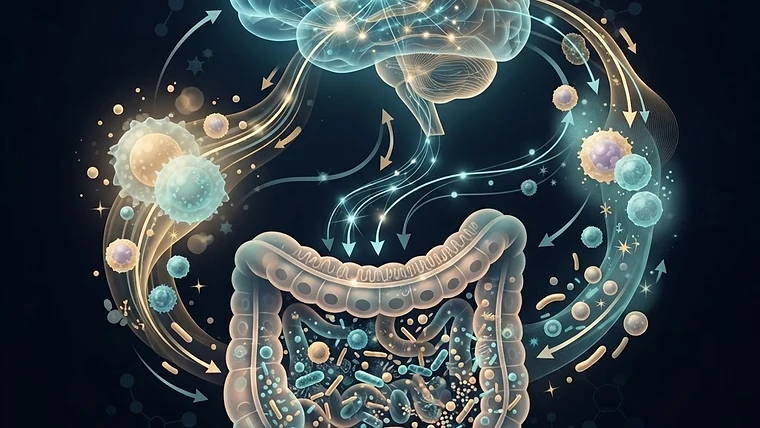
Perhaps the most fascinating area of current research is the gut-brain axis. We now understand that the gut and the brain are in constant communication via immune, neuroendocrine, and neural pathways [2, 4]. Parasites, by altering the composition of the gut microbiome and influencing microbial metabolites like short-chain fatty acids, can disrupt this delicate dialogue [2, 4].
Recent studies indicate that this disruption can lead to neuroinflammation [5, 7]. When the gut barrier is compromised or when systemic inflammation reaches the central nervous system, it can influence neurotransmission [7]. This has led researchers to investigate the potential link between parasitic infections and mental health conditions, including anxiety, depression, and cognitive fog [4, 9]. The hypothesis is that the brain, once thought to be an immune-privileged site, is actually highly sensitive to the inflammatory signals triggered by peripheral infections [7].
Metabolic Health and the Immune Response
Beyond mental health, the intersection of parasites and metabolic conditions like diabetes is gaining traction in scientific literature [10]. Parasites can cause nutritional malabsorption and metabolic disturbances, which may complicate blood sugar regulation [10]. Furthermore, the immune system's attempt to manage these infections requires significant energy, potentially shifting the body's metabolic priorities and contributing to the development of metabolic non-communicable diseases [10].
It is important to note that these mechanisms are complex and multifactorial. The presence of a parasite does not automatically lead to disease, but rather alters the biological terrain in which disease can develop [7].
A New Perspective on Chronic Wellness
As we continue to map the intricate connections between our microbiome, our immune system, and the organisms that inhabit our bodies, we gain a clearer picture of why "one-size-fits-all" approaches to health often fall short. Understanding the role of chronic inflammation and immune dysregulation is a vital step in the evolution of modern health science.
For those interested in exploring these concepts further, James Young, RN, provides a comprehensive look at these dynamics in his book, The Parasite-Disease Connection, which serves as a valuable resource for understanding the broader implications of these hidden biological interactions.
Frequently Asked Questions
Can parasites really affect my mental health?
Research suggests that chronic parasitic infections can trigger systemic inflammation, which may influence the gut-brain axis and contribute to symptoms of anxiety, depression, and cognitive fog [4, 9].
How do parasites contribute to inflammation?
Parasites can act as persistent immune triggers, causing the body to maintain a state of chronic, low-grade inflammation as it attempts to manage the infection [1, 9].
Is there a link between parasites and diabetes?
Some studies indicate that intestinal parasites can cause metabolic disturbances and nutritional issues that may play a role in the development or management of metabolic diseases like diabetes [10].
What is the gut-brain axis?
The gut-brain axis is a bidirectional communication network linking the intestinal microbiome to the central nervous system through immune, metabolic, and neural pathways [2, 4].
Frequently asked questions
Can parasites really affect my mental health?
Research suggests that chronic parasitic infections can trigger systemic inflammation, which may influence the gut-brain axis and contribute to symptoms of anxiety, depression, and cognitive fog.
How do parasites contribute to inflammation?
Parasites can act as persistent immune triggers, causing the body to maintain a state of chronic, low-grade inflammation as it attempts to manage the infection.
Is there a link between parasites and diabetes?
Some studies indicate that intestinal parasites can cause metabolic disturbances and nutritional issues that may play a role in the development or management of metabolic diseases like diabetes.
What is the gut-brain axis?
The gut-brain axis is a bidirectional communication network linking the intestinal microbiome to the central nervous system through immune, metabolic, and neural pathways.