Parasites, Inflammation, and the Hidden Roots of Modern Health
Explore the complex, emerging science behind how parasitic interactions, immune dysregulation, and the gut-brain axis may influence metabolic and mental health.
Evidence context
This article is an educational research review. Associations do not prove causation, and medical decisions should be made with qualified healthcare professionals using the underlying cited evidence.
Topic overview
Cancer and parasites research overviewParasites, Inflammation, and the Hidden Roots of Modern Health
In the landscape of modern medicine, we often view our health through the lens of isolated systems: the brain for mood, the pancreas for blood sugar, and the gut for digestion. However, emerging research suggests these systems are deeply interconnected through a complex, bidirectional communication network. At the center of this conversation is a growing interest in how our immune system, influenced by environmental factors—including the presence of microscopic organisms—may contribute to the chronic inflammation that underpins many modern health challenges.
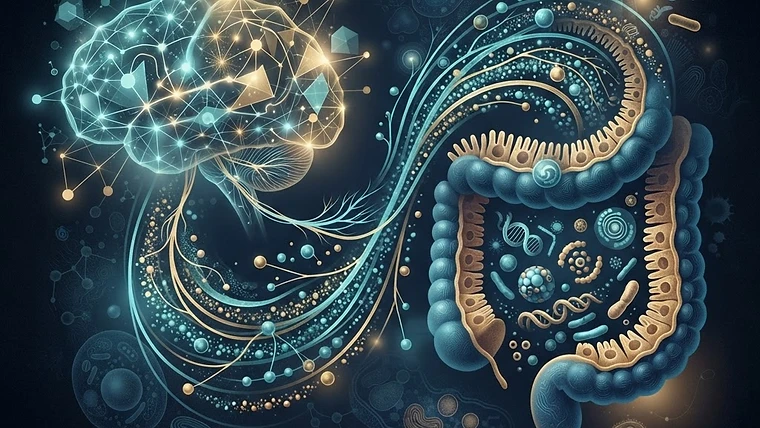
The Gut-Brain Axis and Immune Signaling
The gut-brain axis is no longer viewed as a simple digestive pathway. It is a sophisticated, multisystem communication network. Research indicates that the intestinal microbiota plays a pivotal role in this dialogue, influencing everything from neurotransmitter production to neural circuitry [1]. When this delicate balance is disturbed, the resulting low-grade, chronic inflammation can have systemic effects, potentially manifesting as cognitive fog, mood disorders, or persistent anxiety [1].
Parasitic organisms, by their very nature, interact with this environment. Studies suggest that these organisms can reshape the abundance of gut commensals and alter microbial metabolic outputs, such as short-chain fatty acids (SCFAs) and serotonin precursors [1]. By initiating immune cascades, these interactions may influence the signaling pathways that govern both our metabolic state and our mental well-being [1].
Inflammation: The Common Denominator
Chronic inflammation is a hallmark of many metabolic and autoimmune conditions. When the immune system is in a state of constant activation, it releases cytokines—signaling proteins that, while necessary for defense, can become detrimental when produced in excess [9].
In the context of metabolic syndrome, the body’s ability to regulate glucose is often compromised by systemic inflammation [2]. Interestingly, some research has explored the "hygiene hypothesis," noting that populations in areas where certain helminths (parasitic worms) are endemic often show lower rates of inflammatory-based diseases [3, 6]. Scientists are investigating whether these organisms have evolved mechanisms to modulate the host immune response, potentially offering insights into how we might better manage immune dysregulation in industrialized settings [2, 6].
Neuroinflammation and Mental Health
The link between the immune system and the brain, often termed neuroinflammation, is a burgeoning field of study. When systemic inflammation occurs, it can cross the blood-brain barrier, affecting neural function [8]. This process is increasingly implicated in the development of symptoms associated with depression and anxiety [1].
For instance, certain parasites, such as Toxoplasma gondii, are known to establish chronic infections within immune-privileged tissues, including the central nervous system [8]. While the body attempts to isolate these invaders, the resulting immune response can alter neurotransmitter metabolism, potentially contributing to observable changes in behavior and mood [1]. Understanding these mechanisms is crucial for researchers looking to decode why some individuals experience persistent cognitive or emotional shifts.
Metabolic Shifts and Immune Dysregulation
Parasites do not just exist within the host; they actively modify the host's metabolic environment to ensure their survival [7]. This often involves a metabolic shift in host cells, moving away from efficient energy production toward pathways that favor the parasite's needs [7].
This metabolic reprogramming can have downstream effects on the host's insulin sensitivity and glucose homeostasis [2, 4]. In animal models, dysregulation of host metabolism has been shown to aggravate inflammatory responses, creating a feedback loop that can worsen conditions like metabolic syndrome [4]. As we continue to study these interactions, it becomes clear that the immune system’s response to external stressors is a primary driver of how our bodies manage energy and maintain homeostasis.
A Deeper Look at the Connection
While the science is still evolving, the evidence points toward a future where we view health not as a series of isolated symptoms, but as a reflection of our internal ecology. The interplay between the microbiome, the immune system, and the organisms we host is a frontier that promises to reshape our understanding of chronic disease.
For those interested in exploring these concepts further, James Young, RN, provides a comprehensive look at these mechanisms in his book, The Parasite-Disease Connection. It serves as a valuable resource for those seeking to understand the deeper, often overlooked links between our internal environment and our overall health.
Frequently Asked Questions
How do parasites influence the gut-brain axis?
Research suggests that parasites can alter the composition of gut microbiota and the production of key neurometabolites like serotonin, which then communicate with the brain via the gut-brain axis, potentially affecting mood and cognition [1].
Can parasitic infections lead to chronic inflammation?
Yes, the immune system’s attempt to isolate or expel parasites often triggers the release of cytokines, leading to systemic inflammation. If the infection persists, this inflammation can become chronic [8, 9].
Is there a link between parasites and metabolic syndrome?
Emerging studies indicate that parasitic infections can alter host metabolism and immune regulation. Some research even explores whether certain helminths might modulate immune responses in ways that affect glucose metabolism [2, 3].
What is neuroinflammation?
Neuroinflammation is the inflammation of the nervous tissue. It can be triggered by systemic immune activation, where inflammatory signals cross into the brain, potentially impacting mental health and cognitive function [1, 8].
Frequently asked questions
How do parasites influence the gut-brain axis?
Research suggests that parasites can alter the composition of gut microbiota and the production of key neurometabolites like serotonin, which then communicate with the brain via the gut-brain axis, potentially affecting mood and cognition.
Can parasitic infections lead to chronic inflammation?
Yes, the immune system’s attempt to isolate or expel parasites often triggers the release of cytokines, leading to systemic inflammation. If the infection persists, this inflammation can become chronic.
Is there a link between parasites and metabolic syndrome?
Emerging studies indicate that parasitic infections can alter host metabolism and immune regulation. Some research even explores whether certain helminths might modulate immune responses in ways that affect glucose metabolism.
What is neuroinflammation?
Neuroinflammation is the inflammation of the nervous tissue. It can be triggered by systemic immune activation, where inflammatory signals cross into the brain, potentially impacting mental health and cognitive function.