The Hidden Link: Parasites, Inflammation, and Brain Health
Explore the emerging science of how parasitic organisms influence the gut-brain axis, systemic inflammation, and metabolic health, potentially impacting mood and cognition.
Evidence context
This article is an educational research review. Associations do not prove causation, and medical decisions should be made with qualified healthcare professionals using the underlying cited evidence.
Topic overview
Cancer and parasites research overviewThe Invisible Influence: Parasites and the Body's Internal Ecosystem
For decades, the conversation surrounding human health has focused heavily on diet, genetics, and bacterial microbiomes. However, a growing body of research is turning its attention to a more elusive set of players: parasitic organisms. From protozoa to helminths, these organisms are increasingly recognized as significant, yet under-discussed, modulators of host immunity, gut ecology, and brain function. Emerging science suggests that the interaction between parasites and the human host is not merely a localized event but a systemic cascade that can influence everything from metabolic stability to mental clarity.
The Infection-Immunity-Brain Axis
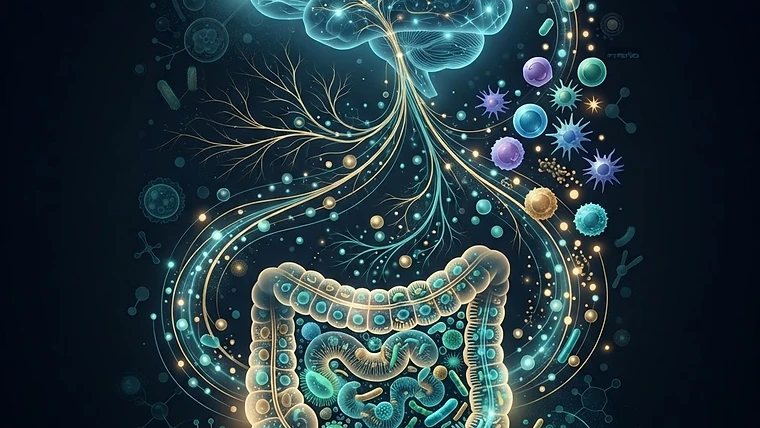
At the heart of this exploration is the "infection-immunity-brain axis." This framework describes how parasitic infections can alter brain function through coordinated peripheral and central immune signaling. The gut-brain axis is a bidirectional communication network where the intestinal environment interacts with the central nervous system (CNS) via immune, neuroendocrine, and neural pathways.
Research indicates that parasitic organisms can alter gut microbiota composition and microbial metabolic outputs, such as short-chain fatty acid profiles. By exerting immunomodulatory effects, these organisms may initiate an immune cascade that affects neurotransmitter metabolism and neural circuitry. This process can lead to observable changes in behavior, mood, and cognitive function, often mediated by systemic inflammation.
Neuroinflammation: When the Brain Responds to Peripheral Stress
One of the most compelling areas of study is how peripheral parasitic infections trigger neuroinflammation. While we often think of the brain as a protected fortress, the blood-brain barrier can be influenced by systemic inflammatory responses. Studies have shown that parasitic excretory products and extracellular vesicles can modulate brain inflammation, potentially destabilizing neural homeostasis.
For instance, certain neurotropic parasites can invade the CNS directly, while others influence it indirectly by triggering systemic immune responses. This neuroinflammation is increasingly linked to behavioral and cognitive changes, including symptoms often associated with anxiety, depression, and cognitive fog. By disrupting the delicate balance of the brain's resident immune cells—microglia and border-associated macrophages—these infections may contribute to a state of chronic neuro-immune activation.
Metabolic Health and the Parasite Connection
Beyond the brain, the impact of parasites on metabolic health is a subject of intense scientific curiosity. The relationship is complex; while some research explores the potential for certain helminths to modulate metabolic disorders, other studies highlight how infections can exacerbate inflammation and aggravate metabolic syndrome.
In some models, parasitic infections have been shown to alter adipogenic signaling and lipid accumulation. Because metabolic inflammation is a known driver of insulin resistance and diabetes, the ability of parasites to shift the inflammatory landscape of the gut and systemic tissues suggests a potential, albeit complex, role in metabolic regulation. The key takeaway from current research is that the effect of these organisms is highly dependent on the species, the stage of infection, and the host's existing microbial environment.
Navigating the Complexity of Immune Dysregulation
Chronic inflammation is a common denominator in many modern health challenges, from autoimmune conditions to metabolic syndrome. Parasites are masters at exploiting immunoregulatory pathways to ensure their own persistence. By recruiting myeloid cells and modulating cytokine production, they can create a unique immunological niche.
This "parasite-directed" immune modulation often mirrors the mechanisms used by other chronic conditions to evade immune surveillance. As science continues to map these pathways, it becomes clear that the immune system's response to parasitic presence is a major factor in how the body maintains—or loses—homeostasis. Understanding these mechanisms is not about finding a single culprit, but about appreciating the intricate, multi-layered dialogue between our bodies and the organisms that inhabit them.
A Deeper Look at the Connection
As we continue to uncover the links between our internal biological environment and our outward health, it is essential to approach these topics with both curiosity and scientific rigor. The field of parasitology is evolving rapidly, moving beyond simple infection models to a more nuanced understanding of host-parasite crosstalk. For those interested in exploring the broader implications of these interactions on human health, the book The Parasite-Disease Connection by James Young, RN, offers a comprehensive look at how these biological relationships may influence systemic wellness and chronic disease patterns.
Conclusion
While the science of how parasites influence inflammation, metabolic health, and the brain is still in its relative infancy, the findings are profound. They remind us that our health is not a static state but a dynamic interaction between our own cells and the vast ecosystem of organisms we host. By continuing to investigate these pathways, researchers hope to gain better insights into the roots of chronic inflammation and the complex factors that shape our mental and metabolic well-being.
Frequently Asked Questions
How do parasites influence the gut-brain axis?
Research suggests that parasites can alter the gut microbiota and its metabolic outputs, which in turn send signals to the brain via the vagus nerve and immune pathways, potentially impacting mood and cognition.
Can parasitic infections lead to neuroinflammation?
Yes, emerging studies indicate that both direct CNS invasion and indirect systemic immune activation by parasites can trigger neuroinflammation, which may disrupt neural homeostasis.
Is there a link between parasites and metabolic syndrome?
Some research indicates that parasitic infections can modulate inflammatory pathways and lipid metabolism, which are critical factors in the development of metabolic syndrome and insulin resistance.
Why is chronic inflammation a concern in this context?
Chronic inflammation is a systemic response that can be triggered or sustained by parasitic activity, potentially contributing to immune dysregulation and the progression of various autoimmune and metabolic conditions.
Frequently asked questions
How do parasites influence the gut-brain axis?
Research suggests that parasites can alter the gut microbiota and its metabolic outputs, which in turn send signals to the brain via the vagus nerve and immune pathways, potentially impacting mood and cognition.
Can parasitic infections lead to neuroinflammation?
Yes, emerging studies indicate that both direct CNS invasion and indirect systemic immune activation by parasites can trigger neuroinflammation, which may disrupt neural homeostasis.
Is there a link between parasites and metabolic syndrome?
Some research indicates that parasitic infections can modulate inflammatory pathways and lipid metabolism, which are critical factors in the development of metabolic syndrome and insulin resistance.
Why is chronic inflammation a concern in this context?
Chronic inflammation is a systemic response that can be triggered or sustained by parasitic activity, potentially contributing to immune dysregulation and the progression of various autoimmune and metabolic conditions.