Parasites, Inflammation, and the Gut-Brain Axis Connection
Explore the emerging science linking parasitic activity, chronic inflammation, and the gut-brain axis to metabolic and mental health conditions.
Evidence context
This article is an educational research review. Associations do not prove causation, and medical decisions should be made with qualified healthcare professionals using the underlying cited evidence.
Topic overview
Cancer and parasites research overviewParasites, Inflammation, and the Gut-Brain Axis Connection
In recent years, the scientific community has shifted its focus toward a more integrated view of human health. We are moving away from viewing the body as a collection of isolated systems and toward understanding it as a complex, interconnected network. At the center of this shift is the gut-brain axis—a bidirectional communication highway that links our intestinal health to our mental and metabolic well-being. Emerging research suggests that parasites, often overlooked in modern clinical settings, may play a significant role in modulating this axis through chronic inflammation and immune system activation.
The Infection-Immunity-Brain Axis
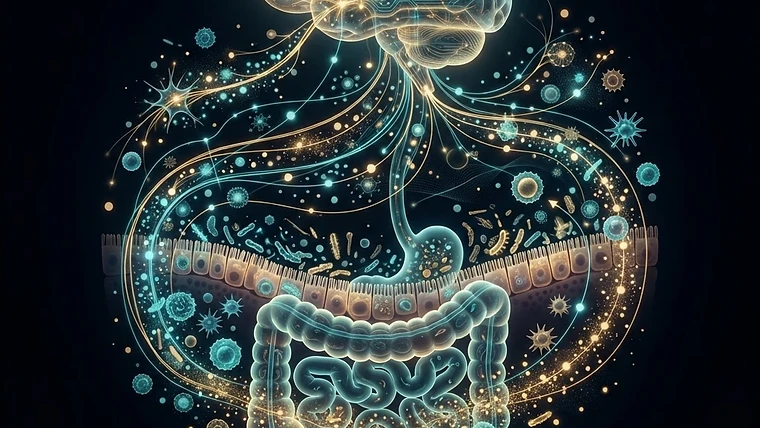
The gut-brain axis is a multisystem network where the intestinal microbiota interacts with the central nervous system (CNS) via immune, neuroendocrine, and neural pathways. While much of the current research focuses on diet and bacteria, parasites—including protozoa and helminths—are increasingly recognized as potent modulators of this environment.
Research indicates that parasitic infections can initiate an immune cascade that alters neurotransmitter metabolism. For instance, by shifting the balance of gut commensals, parasites may influence the production of serotonin, tryptophan, and short-chain fatty acids (SCFAs). When the immune system is chronically activated by these organisms, it can lead to systemic inflammation, which may cross the blood-brain barrier and contribute to neuroinflammation. This process is increasingly studied as a potential factor in mood disorders, cognitive fog, and behavioral changes.
Inflammation: The Common Denominator
Chronic, low-grade inflammation is a hallmark of many modern health challenges, including metabolic syndrome, type 2 diabetes, and various autoimmune conditions. In the context of metabolic health, the body requires a delicate balance of immune responses within adipose tissue. During states of metabolic stress, this balance is often disrupted, leading to an influx of inflammatory cells.
Interestingly, some studies suggest that certain parasites have evolved to manipulate the host immune system to ensure their own survival, often pushing the host toward a specific immune phenotype. While this is a survival strategy for the parasite, it creates a complex ripple effect on the host’s metabolic homeostasis. The resulting systemic immune-metabolic dysregulation is a subject of intense interest, as researchers look for links between these inflammatory markers and the onset of conditions like depression and anxiety.
The Link to Mental and Metabolic Health
Why might a parasite-related immune response manifest as anxiety or metabolic dysfunction? The answer likely lies in the systemic nature of inflammation. When the body is in a state of constant immune activation, it diverts energy and resources away from normal metabolic processes.
- Neuroinflammation: Chronic immune signaling can alter synaptic plasticity and neurotransmitter pathways, which are essential for mood regulation.
- Metabolic Stress: Elevated inflammatory markers, such as C-reactive protein (CRP), are frequently observed in individuals with both diabetes and depressive symptoms, suggesting a shared biological pathway.
- Vagal Signaling: The vagus nerve acts as a primary conduit for gut-to-brain communication. Inflammation in the gut can disrupt these signals, potentially impacting stress responsivity and emotional regulation.
Navigating the Complexity
It is important to emphasize that the relationship between parasites, the immune system, and disease is not linear. Genetics, environmental factors, and the individual’s unique microbiome all play a role in how a person responds to infection. Furthermore, the presence of inflammation does not always indicate a single cause; it is often the result of a "perfect storm" of factors, including diet, stress, and environmental exposures.
As we continue to map the infection-immunity-brain axis, we gain a clearer picture of how deeply our internal ecology influences our external experience of health. For those interested in a deeper exploration of these systemic connections, the book The Parasite-Disease Connection by James Young, RN, provides a comprehensive look at how these biological threads may weave together to impact long-term wellness.
Conclusion
The study of parasites and their influence on the human body is a rapidly evolving field. By viewing conditions like metabolic syndrome, anxiety, and cognitive fog through the lens of the gut-brain axis and chronic inflammation, we open the door to a more nuanced understanding of human health. While the science is still emerging, the focus on systemic balance remains a vital pursuit for anyone interested in the complex interplay between our internal environment and our overall well-being.
Frequently Asked Questions
Can parasites affect mental health?
Research suggests that chronic immune activation caused by parasitic infections can influence the central nervous system via the gut-brain axis, potentially contributing to symptoms of anxiety, depression, and cognitive changes.
How does inflammation link diabetes and depression?
Both type 1 and type 2 diabetes are considered chronic inflammatory conditions. Elevated inflammatory markers, which are common in metabolic dysfunction, may affect neurotransmitter systems and stress responsivity, which are closely linked to the development of depressive symptoms.
What is the gut-brain axis?
It is a bidirectional communication network that connects the gastrointestinal tract to the brain. It involves the nervous system, the immune system, and the endocrine system, allowing the gut microbiome and other intestinal factors to influence brain function.
Are all parasites harmful to metabolic health?
While some parasites are associated with immune dysregulation and inflammation, the field of research is complex. Some studies are investigating how certain parasite-derived products might modulate the immune system, though this is an area of ongoing scientific exploration rather than clinical application.
Frequently asked questions
Can parasites affect mental health?
Research suggests that chronic immune activation caused by parasitic infections can influence the central nervous system via the gut-brain axis, potentially contributing to symptoms of anxiety, depression, and cognitive changes.
How does inflammation link diabetes and depression?
Both type 1 and type 2 diabetes are considered chronic inflammatory conditions. Elevated inflammatory markers, which are common in metabolic dysfunction, may affect neurotransmitter systems and stress responsivity, which are closely linked to the development of depressive symptoms.
What is the gut-brain axis?
It is a bidirectional communication network that connects the gastrointestinal tract to the brain. It involves the nervous system, the immune system, and the endocrine system, allowing the gut microbiome and other intestinal factors to influence brain function.
Are all parasites harmful to metabolic health?
While some parasites are associated with immune dysregulation and inflammation, the field of research is complex. Some studies are investigating how certain parasite-derived products might modulate the immune system, though this is an area of ongoing scientific exploration rather than clinical application.