The Hidden Link: Parasites, Inflammation, and the Gut-Brain Axis
Explore the emerging science behind how parasitic organisms influence systemic inflammation, metabolic health, and the gut-brain axis, potentially impacting mood and cognition.
Evidence context
This article is an educational research review. Associations do not prove causation, and medical decisions should be made with qualified healthcare professionals using the underlying cited evidence.
Topic overview
Cancer and parasites research overviewThe Hidden Link: Parasites, Inflammation, and the Gut-Brain Axis
For decades, the scientific community has focused heavily on bacteria, diet, and lifestyle as the primary drivers of our health. However, a growing body of research is turning its attention to a long-overlooked factor in the human ecosystem: parasitic organisms. From protozoa to helminths, these organisms are increasingly recognized as powerful modulators of gut ecology, host immunity, and even brain function.
The Gut-Brain Axis: A Bidirectional Highway
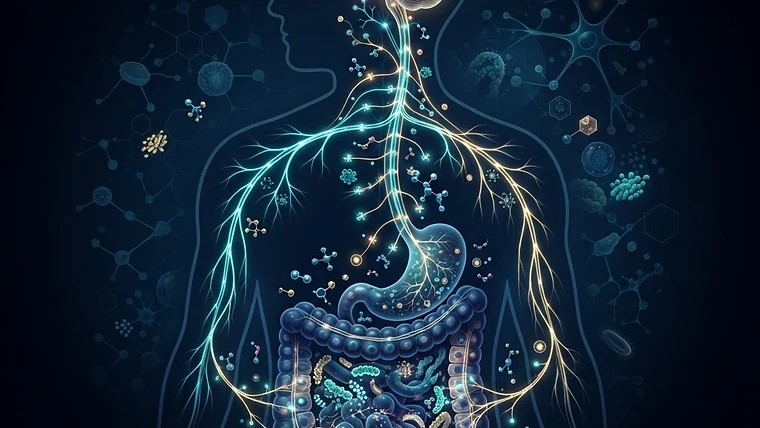
The gut-brain axis is a complex, bidirectional communication network. It links the intestinal microbiota to the central nervous system (CNS) through immune, neuroendocrine, and neural pathways. While we often think of this axis in terms of diet or probiotics, emerging science suggests that parasitic infections can significantly alter this landscape.
Research indicates that parasites can trigger a "gut-to-brain" signal that influences everything from food intake to mood. By altering the composition of the gut microbiota and the production of microbial metabolites—such as short-chain fatty acids—parasites may exert immunomodulatory effects that ripple throughout the entire body.
Neuroinflammation and Behavioral Changes
One of the most compelling areas of current research is how peripheral infections contribute to neuroinflammation. When the body detects a parasitic presence, it initiates an immune cascade. In some cases, this response can lead to the production of pro-inflammatory cytokines and chemokines by activated glial cells, such as astrocytes and microglia.
Studies have shown that certain parasites can influence the blood-brain barrier, potentially destabilizing neural homeostasis. This process is not just physical; it is biochemical. By altering neurotransmitter metabolism and neural circuitry, these infections may contribute to observable changes in behavior, mood, and cognitive clarity. This "parasite facilitation" hypothesis suggests that some organisms may influence host neurochemistry to favor their own survival, which in turn may manifest as anxiety, depression, or cognitive fog in the host.
Metabolic Health and Immune Dysregulation
The relationship between parasites and metabolic health is equally nuanced. While chronic inflammation is a hallmark of metabolic syndrome and insulin resistance, the role of parasites is paradoxical. Some research suggests that certain helminth infections might actually help alleviate inflammation and improve insulin sensitivity in specific models, while other protozoan infections may rely on host cholesterol and lipids, potentially exacerbating metabolic stress.
This suggests that the immune system’s response to a parasite is not always a simple "good vs. bad" scenario. Instead, it is a complex dance of immune regulation. When this regulation becomes dysregulated, it can lead to a state of chronic, low-grade inflammation that underpins many modern metabolic and autoimmune conditions.
Understanding the Complexity
It is important to approach this topic with scientific curiosity rather than alarm. The human body is a host to a vast array of microorganisms, and our understanding of how these organisms interact with our immune system is still in its infancy. We are moving away from a model that views the body as a sterile environment and toward one that recognizes the profound impact of our internal biological community.
As we continue to map these interactions, it becomes clear that the path to understanding complex conditions—ranging from metabolic syndrome to mood disorders—may require a broader look at the hidden factors influencing our systemic health. For those interested in a deeper exploration of these mechanisms, the book The Parasite-Disease Connection by James Young, RN, provides a comprehensive look at how these biological connections may influence long-term wellness.
Conclusion
The intersection of parasitology, immunology, and neurology is one of the most exciting frontiers in modern science. By investigating how these organisms influence inflammation and the gut-brain axis, researchers are uncovering new ways to think about the root causes of chronic health challenges. While we are only beginning to scratch the surface, the evidence suggests that our internal ecosystem is far more influential than we ever imagined.
Frequently Asked Questions
Can parasites affect my mood or mental health?
Research suggests that parasitic infections can trigger neuroinflammation and alter neurotransmitter metabolism, which may be linked to changes in mood, anxiety, and cognitive function.
How do parasites influence the gut-brain axis?
Parasites can alter the gut microbiota composition and microbial metabolites, which communicate with the brain via the vagus nerve and immune signaling pathways.
Is there a link between parasites and metabolic health?
Some studies indicate that parasitic infections can modulate immune responses and lipid metabolism, potentially influencing insulin resistance and metabolic syndrome.
What is neuroinflammation?
Neuroinflammation is the inflammation of the nervous tissue, often triggered by immune system activation in response to infection or injury, which can affect brain homeostasis.
Frequently asked questions
Can parasites affect my mood or mental health?
Research suggests that parasitic infections can trigger neuroinflammation and alter neurotransmitter metabolism, which may be linked to changes in mood, anxiety, and cognitive function.
How do parasites influence the gut-brain axis?
Parasites can alter the gut microbiota composition and microbial metabolites, which communicate with the brain via the vagus nerve and immune signaling pathways.
Is there a link between parasites and metabolic health?
Some studies indicate that parasitic infections can modulate immune responses and lipid metabolism, potentially influencing insulin resistance and metabolic syndrome.
What is neuroinflammation?
Neuroinflammation is the inflammation of the nervous tissue, often triggered by immune system activation in response to infection or injury, which can affect brain homeostasis.