Parasites, Inflammation, and the Gut-Brain Axis: A New Frontier
Explore the emerging science connecting parasitic interactions, chronic inflammation, and the gut-brain axis to metabolic and mental health conditions.
Evidence context
This article is an educational research review. Associations do not prove causation, and medical decisions should be made with qualified healthcare professionals using the underlying cited evidence.
Topic overview
Cancer and parasites research overviewThe Hidden Dialogue: Parasites and Human Physiology
For decades, the scientific community viewed the relationship between humans and parasites primarily through the lens of infection and pathology. However, a more nuanced picture is emerging. As we delve deeper into the complexities of the human microbiome and the immune system, researchers are beginning to explore how these ancient organisms interact with our internal environment—not just as invaders, but as active modulators of our metabolic and mental health.
Emerging science suggests that the interplay between parasites, the immune system, and the gut-brain axis may play a significant role in conditions ranging from metabolic syndrome to mood disorders. By understanding these mechanisms, we gain a clearer view of how chronic inflammation and immune dysregulation influence our overall well-being.
The Metabolic Connection: Inflammation and Immunity
Obesity and type 2 diabetes are often characterized by chronic, low-grade inflammation. In a healthy state, our immune system maintains metabolic homeostasis. However, in metabolic syndrome, this balance is disrupted, often replaced by inflammatory macrophages and T cells that contribute to insulin resistance [2, 4].
Interestingly, some studies indicate that certain helminth parasites possess the ability to manipulate the host immune response toward a type 2, anti-inflammatory phenotype [2, 6]. This has led to the hypothesis that these organisms might influence metabolic health by modulating the very inflammatory pathways that drive conditions like diabetes [2, 5]. While this does not suggest that parasites are a treatment, it highlights the profound impact that immune-modulating organisms can have on our metabolic landscape [10].
The Gut-Brain Axis: Where Inflammation Meets Mood
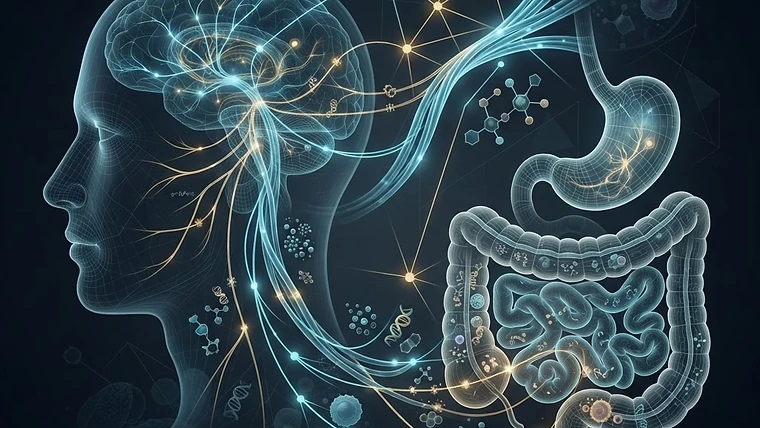
The gut-brain axis is a bidirectional communication network that links the intestinal environment to the central nervous system [8, 9]. Recent research has increasingly highlighted how gut dysbiosis—an imbalance in the microbial community—can trigger systemic inflammation, which in turn may influence neuroinflammation and behavioral dysfunction [8].
When the gut environment is altered, whether by diet, stress, or the presence of foreign organisms, the resulting immune activation can release cytokines that cross the blood-brain barrier [7, 9]. This process is being studied as a potential contributor to the onset of anxiety, depression, and cognitive fog [7, 8]. Because parasites can alter the composition of the gut microbiota and the metabolic outputs of those microbes, they are now being examined as potential, albeit complex, players in this gut-brain communication network [8, 10].
Understanding Neuroinflammation
Neuroinflammation is no longer viewed solely as a response to injury; it is increasingly recognized as a factor in various psychiatric and neurological conditions [8]. If the gut is the "second brain," then the immune signals originating from the gut are the messengers. When these signals are consistently inflammatory, the brain may experience a state of chronic activation that impacts mood, focus, and cognitive clarity [7, 8].
Research into how parasites influence these pathways is still in its infancy, but it provides a compelling framework for understanding why metabolic and mental health conditions often co-occur [8, 10]. The goal of this research is not to suggest simple solutions, but to map the intricate connections that define human health.
A Deeper Look at the Connection
As we continue to explore these intersections, it becomes clear that our health is a product of a vast, interconnected system. For those interested in a more comprehensive exploration of how these biological threads weave together, the book The Parasite-Disease Connection by James Young, RN, offers a deeper dive into the historical and scientific context of these relationships, providing a resource for those looking to understand the broader implications of the parasite-disease landscape.
Conclusion
The science of the gut-brain axis and immune regulation is rapidly evolving. By looking at the role of parasites not just as pathogens, but as biological entities that interact with our immune and metabolic systems, we open new doors for understanding chronic health challenges. As research continues to unfold, we move closer to a more integrated view of human physiology—one where every organism, from the smallest microbe to the human host, plays a part in the complex dance of health and disease.
Frequently Asked Questions
Can parasites influence my mood or anxiety levels?
Research suggests that the gut-brain axis plays a significant role in mental health. Because parasites can alter gut microbiota and trigger immune responses, scientists are exploring how these changes might influence neuroinflammation and, consequently, mood and anxiety [7, 8].
Is there a link between parasites and diabetes?
Some studies indicate that parasitic infections can alter lipid and glycemic levels, potentially impacting metabolic health [1, 3]. While the relationship is complex, researchers are investigating how immune modulation by parasites might affect the chronic inflammation associated with type 2 diabetes [2, 4].
What is the gut-brain axis?
The gut-brain axis is a bidirectional communication network involving neural, immune, and endocrine pathways that connect the gut and its microbiota to the brain [8, 9]. It is a key area of study for understanding how gut health impacts cognitive and emotional well-being [7, 8].
Does inflammation cause metabolic syndrome?
Yes, chronic, low-grade inflammation is a hallmark of metabolic syndrome and obesity [4, 6]. This inflammation is often driven by an imbalance in immune cells within adipose tissue, which can lead to insulin resistance and other metabolic issues [2, 4].
Frequently asked questions
Can parasites influence my mood or anxiety levels?
Research suggests that the gut-brain axis plays a significant role in mental health. Because parasites can alter gut microbiota and trigger immune responses, scientists are exploring how these changes might influence neuroinflammation and, consequently, mood and anxiety.
Is there a link between parasites and diabetes?
Some studies indicate that parasitic infections can alter lipid and glycemic levels, potentially impacting metabolic health. While the relationship is complex, researchers are investigating how immune modulation by parasites might affect the chronic inflammation associated with type 2 diabetes.
What is the gut-brain axis?
The gut-brain axis is a bidirectional communication network involving neural, immune, and endocrine pathways that connect the gut and its microbiota to the brain. It is a key area of study for understanding how gut health impacts cognitive and emotional well-being.
Does inflammation cause metabolic syndrome?
Yes, chronic, low-grade inflammation is a hallmark of metabolic syndrome and obesity. This inflammation is often driven by an imbalance in immune cells within adipose tissue, which can lead to insulin resistance and other metabolic issues.