Parasites, Inflammation, and the Gut-Brain Axis Connection
Explore the emerging science linking parasitic infections to chronic inflammation, metabolic syndrome, and mental health conditions through the gut-brain axis.
Evidence context
This article is an educational research review. Associations do not prove causation, and medical decisions should be made with qualified healthcare professionals using the underlying cited evidence.
Topic overview
Cancer and parasites research overviewThe Hidden Link: Parasites and Systemic Health
For decades, the scientific community viewed parasitic infections primarily through the lens of acute illness. However, a paradigm shift is underway. Emerging research suggests that the relationship between humans and parasites is far more complex, involving long-term interactions that may influence systemic inflammation, metabolic health, and even cognitive function. As we explore the intersection of parasites, the immune system, and the gut-brain axis, we are uncovering how these organisms might act as silent modulators of our internal environment.
The Gut-Brain Axis and Immune Activation
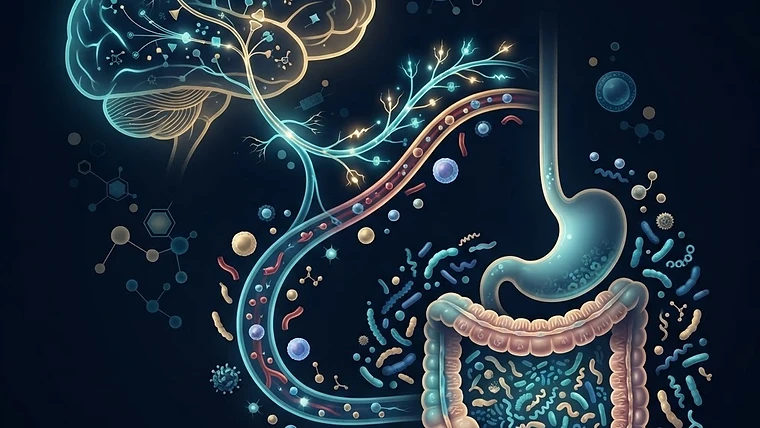
The gut-brain axis is a bidirectional communication network linking the intestinal microbiota with the central nervous system (CNS). This system relies on immune, neuroendocrine, and neural pathways to maintain homeostasis. When this axis is disrupted—often through gut dysbiosis or chronic immune activation—the consequences can ripple throughout the body.
Research indicates that parasitic organisms, including both protozoa and helminths, can significantly alter gut ecology. By shifting the composition of the microbiome and influencing microbial metabolic outputs, such as short-chain fatty acid profiles, parasites may exert immunomodulatory effects. These changes can trigger systemic inflammation, which is increasingly recognized as a potential driver of neuroinflammation—a state often associated with cognitive fog, mood disorders, and behavioral changes.
Inflammation: The Common Denominator
Chronic inflammation is a hallmark of many modern health challenges, from metabolic syndrome to autoimmune conditions. Parasitic infections can induce a state of persistent immune activation. While the body attempts to manage these invaders, the resulting release of cytokines and other inflammatory mediators can lead to systemic stress.
In the context of metabolic health, studies have explored how these inflammatory responses interact with insulin sensitivity. Some research suggests that intestinal parasites may play a role in metabolic diseases like diabetes by altering how the body processes nutrients and manages glucose homeostasis. The interplay between obesity, low-grade chronic inflammation, and parasitic presence remains a vibrant area of scientific inquiry, highlighting the need to understand how our immune system balances defense with metabolic stability.
Neuroinflammation and Mental Health
Perhaps the most intriguing area of current research is the link between peripheral infections and brain function. The blood-brain barrier, once thought to be an impenetrable fortress, is now understood to be vulnerable to systemic inflammatory signals. Parasitic excretory products and extracellular vesicles may modulate brain inflammation, potentially influencing neurotransmission.
This mechanism provides a theoretical framework for understanding why some individuals experience anxiety, depression, or cognitive decline in the presence of chronic immune stressors. By destabilizing neural homeostasis, these infections may contribute to a range of neurological and psychiatric conditions, suggesting that the gut-brain axis is a critical pathway for future therapeutic exploration.
A New Perspective on Host-Parasite Co-evolution
Evolutionary biology teaches us that humans and parasites have co-existed for millennia. This long-term relationship has shaped our immune systems in profound ways. While some infections are clearly deleterious, others have prompted the development of complex regulatory pathways. For instance, the recruitment of regulatory T cells (Tregs) to suppress excessive inflammation is a strategy used by both parasites to survive and by the body to prevent autoimmune damage. Understanding these regulatory mechanisms is essential for grasping how our bodies maintain balance in the face of constant environmental challenges.
Conclusion: The Path Forward
As we continue to map the complex interactions between parasites, the immune system, and our metabolic and mental health, it becomes clear that we are only scratching the surface. The science suggests that our internal ecosystem is far more interconnected than previously imagined. For those interested in a deeper exploration of these biological relationships, the book "The Parasite-Disease Connection" by James Young, RN, offers a comprehensive look at how these factors may converge to impact overall well-being.
By fostering a deeper understanding of these mechanisms, we move closer to identifying new ways to support health and resilience in an increasingly complex world.
Frequently asked questions
Can parasites affect mental health?
Emerging research suggests that parasites may influence the central nervous system indirectly through gut dysbiosis and systemic inflammation, which are linked to conditions like anxiety and depression.
Is there a link between parasites and diabetes?
Some studies indicate that intestinal parasites may influence metabolic homeostasis and insulin resistance, though more research is needed to fully understand this potential connection.
What is the gut-brain axis?
The gut-brain axis is a bidirectional communication network that connects the gastrointestinal tract to the brain via immune, endocrine, and neural pathways.
How does chronic inflammation impact the brain?
Chronic systemic inflammation can lead to neuroinflammation, which may disrupt brain homeostasis and contribute to cognitive fog and mood disorders.