Parasites, Inflammation, and the Gut-Brain Axis: A New Frontier
Explore the emerging science connecting parasitic organisms, chronic inflammation, and the gut-brain axis to metabolic and mental health conditions.
Evidence context
This article is an educational research review. Associations do not prove causation, and medical decisions should be made with qualified healthcare professionals using the underlying cited evidence.
Topic overview
Cancer and parasites research overviewParasites, Inflammation, and the Gut-Brain Axis: A New Frontier
In recent years, the scientific community has shifted its focus toward a more integrated view of human health. We are moving away from viewing the body as a collection of isolated systems and toward understanding it as a complex, interconnected network. At the center of this shift is the gut-brain axis—a bidirectional communication highway that links our intestinal environment to our central nervous system. Emerging research suggests that parasitic organisms, ranging from protozoa to helminths, may play a far more significant role in this network than previously understood.
The Gut-Brain Axis and Immune Signaling
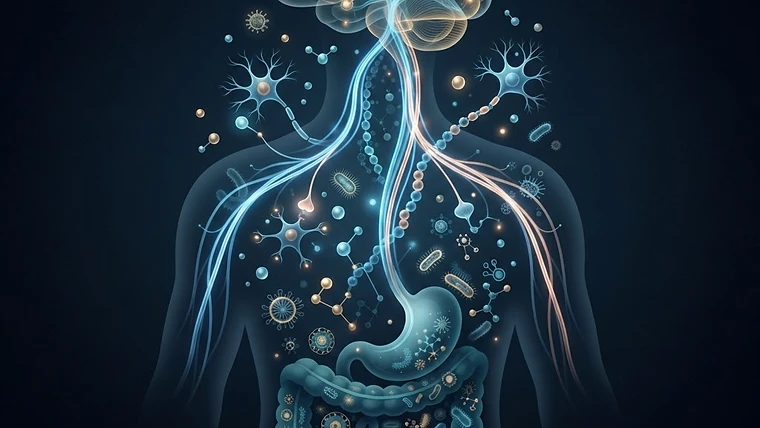
The gut-brain axis is a multisystem communication network where the intestinal microbiota interacts with the central nervous system via immune, neuroendocrine, and neural pathways [1]. While much of the early research focused on diet and bacteria, scientists are now investigating how parasites act as potent modulators of this ecology.
Parasites can alter the composition of the gut microbiome and the production of microbial metabolites, such as short-chain fatty acids (SCFAs) [1]. These changes can trigger systemic immune activation. When the immune system is chronically activated, it releases proinflammatory cytokines that can cross the blood-brain barrier, leading to what researchers call neuroinflammation [1, 5]. This process is increasingly being studied for its potential role in mood disorders, cognitive fog, and behavioral changes [1, 5].
Parasites and Metabolic Health: The Diabetes Connection
The relationship between infectious agents and non-communicable diseases is an active area of investigation. A systematic review and meta-analysis published in 2023 highlighted a significant association between intestinal parasites and diabetes [2]. The study found that the pooled prevalence of intestinal parasites in diabetic patients was approximately 26.5%, suggesting that these organisms may influence metabolic homeostasis [2].
Mechanistically, parasites can alter host enzymes and metabolic factors [3]. For instance, Toxoplasma gondii has been studied for its potential link to type 2 diabetes, with some research suggesting that if such parasites contribute to chronic inflammation, they may be relevant factors in metabolic health [3]. The interplay between immune dysregulation and insulin resistance remains a critical area for future study, as researchers seek to understand how systemic inflammation disrupts the body's ability to regulate blood sugar [3, 9].
Neuroinflammation and Mental Health
Perhaps one of the most intriguing areas of research is the link between parasitic infection and mental health conditions, including anxiety, depression, and bipolar disorder [5]. The mechanism often cited is the "parasite-immune-neurotransmitter" triad [1].
When a parasite enters the body, it can induce immune activation that alters tryptophan metabolism—a precursor to serotonin, the "feel-good" neurotransmitter [1]. By shifting the balance of these pathways, chronic infection may create an inflammatory environment that influences brain function [1, 5]. For example, Toxoplasma gondii is known to establish infections in the central nervous system, and its presence is associated with altered inflammatory responses that may set the stage for mood disorders [5]. This is not to suggest a simple cause-and-effect, but rather to highlight how systemic immune dysregulation can manifest as psychological symptoms through the gut-brain axis [1, 5].
The Paradox of Helminths and Inflammation
Interestingly, not all parasitic interactions are purely proinflammatory. Research into helminths (parasitic worms) has revealed a fascinating paradox: populations endemic to these parasites often show lower rates of certain inflammatory-based diseases [9].
Helminths have evolved to modulate the host immune system to survive, often inducing a regulatory, anti-inflammatory "Type 2" immune response [9]. Some experimental studies have explored whether this regulatory phenotype could be harnessed to suppress the chronic, low-grade inflammation associated with obesity and metabolic syndrome [9]. While this remains experimental, it underscores the complexity of the host-parasite relationship and how these organisms can fundamentally reshape our immune landscape [9].
Conclusion: A Deeper Understanding
As we continue to map the complex interactions between our microbiome, our immune system, and the environment, the role of parasites is becoming increasingly clear as a piece of the puzzle. Whether through the disruption of metabolic pathways or the induction of neuroinflammation, these organisms are active participants in our biological health.
For those interested in exploring these connections further, James Young, RN, provides a comprehensive look at these mechanisms in his book, The Parasite-Disease Connection. By continuing to investigate these links, we move closer to a more holistic understanding of how our internal ecology influences our overall well-being.
Frequently Asked Questions
Can parasites really affect my mood or mental health?
Research suggests that parasites can influence the gut-brain axis, potentially leading to systemic inflammation that affects neurotransmitter pathways and brain function, which may be linked to mood disorders like anxiety and depression [1, 5].
Is there a link between parasites and diabetes?
Some studies have identified a significant association between the presence of certain intestinal parasites and diabetes, suggesting that parasitic infection may contribute to metabolic disturbances and chronic inflammation [2, 3].
What is the gut-brain axis?
The gut-brain axis is a bidirectional communication network linking the gut microbiota to the central nervous system through immune, neural, and endocrine pathways [1].
Do all parasites cause inflammation?
While many parasites trigger a proinflammatory response, some, such as helminths, are known to induce a regulatory, anti-inflammatory immune response, which is a subject of ongoing research regarding metabolic health [9].
Frequently asked questions
Can parasites really affect my mood or mental health?
Research suggests that parasites can influence the gut-brain axis, potentially leading to systemic inflammation that affects neurotransmitter pathways and brain function, which may be linked to mood disorders like anxiety and depression.
Is there a link between parasites and diabetes?
Some studies have identified a significant association between the presence of certain intestinal parasites and diabetes, suggesting that parasitic infection may contribute to metabolic disturbances and chronic inflammation.
What is the gut-brain axis?
The gut-brain axis is a bidirectional communication network linking the gut microbiota to the central nervous system through immune, neural, and endocrine pathways.
Do all parasites cause inflammation?
While many parasites trigger a proinflammatory response, some, such as helminths, are known to induce a regulatory, anti-inflammatory immune response, which is a subject of ongoing research regarding metabolic health.