The Hidden Link: Parasites, Inflammation, and the Gut-Brain Axis
Explore the emerging science behind how parasitic organisms, chronic inflammation, and the gut-brain axis may influence metabolic and mental health.
Evidence context
This article is an educational research review. Associations do not prove causation, and medical decisions should be made with qualified healthcare professionals using the underlying cited evidence.
Topic overview
Cancer and parasites research overviewThe Hidden Link: Parasites, Inflammation, and the Gut-Brain Axis
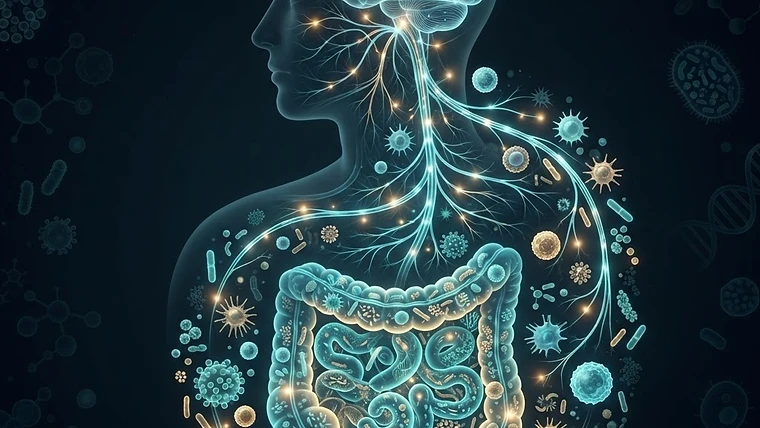
In recent years, the scientific community has shifted its focus toward a more integrated view of human health. We are moving away from viewing the body as a collection of isolated systems and toward understanding it as a complex, interconnected network. At the center of this conversation is the gut-brain axis—a bidirectional communication highway that links our intestinal health to our cognitive and emotional states.
Emerging research suggests that this axis is not only influenced by diet and bacteria but may also be modulated by a more under-discussed factor: parasitic organisms. From protozoa to helminths, these organisms interact with our immune system in ways that may have profound implications for metabolic health, mood, and cognitive function.
The Infection-Immunity-Brain Axis
The "infection-immunity-brain" axis describes how parasitic infections can alter brain function through coordinated peripheral and central immune signaling. When the body encounters a parasite, it initiates an immune cascade. This response does not stay confined to the gut; it releases cytokines and other signaling molecules that can cross the blood-brain barrier, potentially influencing neurotransmitter metabolism and neural circuitry.
Research indicates that this immune activation can alter pathways involving tryptophan and serotonin—key players in mood regulation. When the immune system is in a state of chronic, low-grade activation, it may contribute to the neuroinflammation often observed in conditions like anxiety, depression, and cognitive fog.
Parasites and Metabolic Health: A Complex Paradox
One of the most intriguing areas of current research is the relationship between parasites and metabolic syndrome. Metabolic syndrome is a cluster of conditions—including insulin resistance, abdominal obesity, and dysregulated glucose levels—that are often driven by chronic, systemic inflammation.
Interestingly, some studies have noted an inverse correlation between certain helminth infections and the incidence of metabolic diseases. While this may seem counterintuitive, the mechanism is thought to lie in the host's immune response. Helminths often induce a "Type 2" immune response, which is characteristically anti-inflammatory. This response can lead to the infiltration of M2 macrophages into adipose tissue, which may help suppress the chronic pro-inflammatory state associated with obesity and insulin resistance.
However, this is a delicate balance. While some parasitic excretory-secretory products (ESPs) are being studied for their potential to modulate immunity, the presence of a live infection also involves tissue disruption and metabolic demands. The science here is nuanced, suggesting that the interaction between parasites and host metabolism is highly dependent on the specific organism and the host's unique immune landscape.
Inflammation, Mood, and the Gut-Brain Connection
The gut-brain axis is a multisystem communication network. When gut dysbiosis occurs—whether due to diet, stress, or the presence of foreign organisms—the resulting inflammation can ripple outward. Studies have shown that individuals with higher baseline inflammation are often more susceptible to mood disorders.
Parasites can alter the composition of the gut microbiota and the production of short-chain fatty acids (SCFAs), which are vital for maintaining the integrity of the gut lining and supporting brain health. When these microbial outputs are disrupted, the resulting "leaky" gut or systemic inflammation can trigger neuroendocrine dysregulation, potentially manifesting as symptoms of anxiety or depression.
Navigating the Research Landscape
It is important to approach this field with scientific curiosity rather than alarm. The relationship between parasites and human health is not binary; it is a complex evolutionary dance. While some research highlights the potential for parasites to trigger immune dysregulation and neuroinflammation, other studies explore how parasitic products might be harnessed to modulate overactive immune responses in autoimmune conditions.
As we continue to map the gut-brain axis, it becomes clear that our internal ecology is a major determinant of our overall well-being. For those interested in a deeper exploration of these mechanisms, the book The Parasite-Disease Connection by James Young, RN, provides a comprehensive look at how these biological pathways may intersect with chronic health challenges.
Conclusion
The study of parasites, inflammation, and the gut-brain axis is still in its infancy, but it offers a promising frontier for understanding the roots of metabolic and mental health conditions. By viewing the body as a holistic system, we can better appreciate how even the smallest organisms can influence our largest health outcomes. As always, maintaining a focus on evidence-based research and consulting with healthcare professionals remains the best path forward for those navigating their own health journeys.
Frequently asked questions
How do parasites affect the gut-brain axis?
Parasites can influence the gut-brain axis by altering the gut microbiota, changing the production of neurotransmitter-related metabolites like serotonin, and triggering systemic immune responses that can lead to neuroinflammation.
Is there a link between parasites and depression?
Emerging research suggests that chronic inflammation caused by various factors, including parasitic infections, may contribute to the development of mood disorders by affecting the central nervous system through immune-to-brain signaling pathways.
Can parasites influence metabolic health?
Some studies indicate that certain helminth parasites may modulate the host's immune system in a way that reduces obesity-driven inflammation, though this is a complex area of research that does not imply parasites are a treatment for metabolic disease.
What is the role of chronic inflammation in metabolic syndrome?
Chronic, low-grade inflammation is a hallmark of metabolic syndrome. It is often associated with insulin resistance and the infiltration of inflammatory cells into adipose tissue, which can disrupt metabolic homeostasis.