The Hidden Link: Parasites, Inflammation, and the Gut-Brain Axis
Explore the emerging science connecting parasitic influence, chronic inflammation, and the gut-brain axis to metabolic and mental health conditions.
Evidence context
This article is an educational research review. Associations do not prove causation, and medical decisions should be made with qualified healthcare professionals using the underlying cited evidence.
Topic overview
Cancer and parasites research overviewThe Hidden Link: Parasites, Inflammation, and the Gut-Brain Axis
In recent years, the scientific community has shifted its focus toward a more integrated view of human health. We are moving away from viewing the body as a collection of isolated systems and toward understanding it as a complex, interconnected network. At the center of this shift is the gut-brain axis—a bidirectional communication highway linking our intestinal health to our mental and metabolic well-being. Emerging research suggests that among the many factors influencing this axis, parasitic organisms—ranging from protozoa to helminths—may play a more significant role than previously appreciated.
The Microbiota-Gut-Brain Axis: A New Frontier
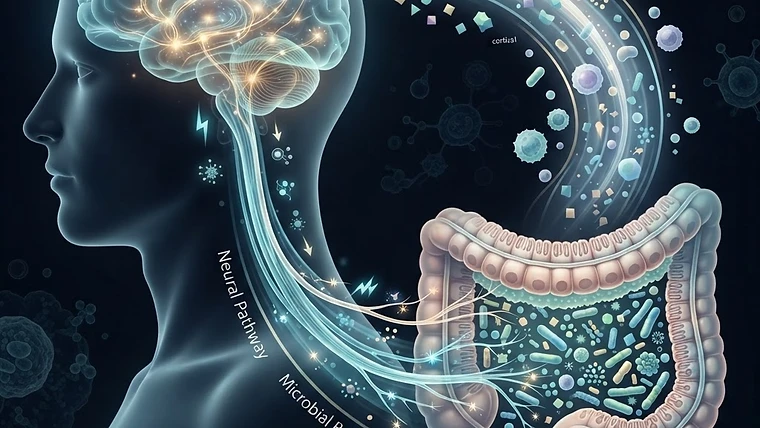
The gut-brain axis is a multisystem network where the intestinal microbiota, the immune system, and the central nervous system (CNS) constantly exchange information. When this system is balanced, it supports healthy mood regulation, metabolic function, and immune resilience. However, when this balance is disrupted—a state often referred to as dysbiosis—the consequences can be systemic.
Research indicates that low-grade, chronic inflammation is a hallmark of this disruption. When the gut barrier becomes permeable, often called "leaky gut," microbial products and inflammatory signals can enter the bloodstream. This systemic inflammation can eventually impact the brain, leading to what researchers call neuroinflammation, which has been implicated in conditions such as anxiety, depression, and cognitive fog.
Parasites as Modulators of Gut Ecology
While much of the current research on the gut-brain axis focuses on bacteria and diet, parasitic organisms represent a major, under-discussed class of modulators. Parasites can alter the composition of the gut microbiota and change the metabolic outputs of the gut, such as the production of short-chain fatty acids, which are vital for maintaining gut health and regulating immune responses.
Studies suggest that parasitic infections can trigger immune activation, leading to the release of cytokines—signaling proteins that mediate inflammation. In some cases, these parasites have evolved sophisticated mechanisms to evade the host's immune system, such as recruiting regulatory T cells (Tregs) to suppress anti-parasitic immunity. Interestingly, some research highlights a convergent evolution where both parasites and certain disease processes, such as cancer, utilize similar immunoregulatory pathways to persist within the host.
The Connection to Metabolic and Mental Health
The intersection of parasitic influence, inflammation, and the gut-brain axis is particularly relevant to the rising prevalence of metabolic and mental health conditions.
Metabolic Syndrome and Diabetes
Clinical observations have noted that metabolic diseases, such as type 2 diabetes and obesity, frequently coexist with gastrointestinal disorders. The inflammatory environment created by gut dysbiosis can interfere with insulin signaling, potentially contributing to insulin resistance. When the immune system is in a state of chronic activation, the body’s metabolic priorities shift, which may exacerbate metabolic syndrome.
Anxiety, Depression, and Mood Disorders
Similarly, the link between inflammation and mental health is becoming increasingly clear. Chronic inflammation can alter neurotransmitter metabolism, reducing the availability of precursors needed for mood-regulating chemicals like serotonin. Furthermore, the activation of the hypothalamic-pituitary-adrenal (HPA) axis—the body’s primary stress response system—is often observed in individuals with chronic inflammatory states. This creates a feedback loop where stress increases inflammation, and inflammation, in turn, affects the brain’s ability to manage stress, potentially manifesting as anxiety or depressive symptoms.
Understanding the Infection-Immunity-Brain Triad
Researchers are now describing an "infection-immunity-brain" triad to explain how parasitic infections can alter brain function through coordinated peripheral and central immune signaling. By activating the vagus nerve or crossing the blood-brain barrier, inflammatory signals can directly influence the CNS. This suggests that the biological factors contributing to mental illness are not merely "in the head" but are deeply rooted in the systemic health of the body.
It is important to note that these relationships are complex and bidirectional. Genetics, environmental factors, and the individual’s baseline immune status all play a role in how a person responds to these stressors. For those interested in exploring these mechanisms further, James Young, RN, provides a comprehensive look at these interactions in his book, The Parasite-Disease Connection, which serves as a valuable resource for understanding the broader implications of these biological links.
Conclusion
The study of how parasites, inflammation, and the gut-brain axis intersect is still in its infancy, but it offers a promising framework for understanding the complexity of human health. By viewing conditions like metabolic syndrome, anxiety, and depression through the lens of systemic inflammation and microbial ecology, we may gain new insights into how to support the body’s natural resilience. As research continues to evolve, the focus remains on understanding these intricate pathways to better support overall well-being.
Frequently Asked Questions
How do parasites influence the gut-brain axis?
Parasites can alter the gut microbiota composition and trigger systemic immune responses. These responses release inflammatory cytokines that can communicate with the brain via the vagus nerve or by crossing the blood-brain barrier, potentially impacting mood and cognitive function.
Can chronic inflammation lead to mental health issues?
Yes, research suggests that chronic, low-grade inflammation can disrupt neurotransmitter metabolism and activate the body's stress response systems, which are pathways frequently associated with the development of anxiety and depression.
Is there a link between gut health and diabetes?
Emerging science indicates that gut dysbiosis and the resulting systemic inflammation can interfere with insulin signaling and metabolic regulation, which are key factors in the development of metabolic syndrome and type 2 diabetes.
What is the role of the immune system in this connection?
The immune system acts as the primary mediator between the gut and the brain. When the immune system is chronically activated by factors like parasites or gut permeability, it produces signaling molecules that can influence brain chemistry and behavior.
Frequently asked questions
How do parasites influence the gut-brain axis?
Parasites can alter the gut microbiota composition and trigger systemic immune responses. These responses release inflammatory cytokines that can communicate with the brain via the vagus nerve or by crossing the blood-brain barrier, potentially impacting mood and cognitive function.
Can chronic inflammation lead to mental health issues?
Yes, research suggests that chronic, low-grade inflammation can disrupt neurotransmitter metabolism and activate the body's stress response systems, which are pathways frequently associated with the development of anxiety and depression.
Is there a link between gut health and diabetes?
Emerging science indicates that gut dysbiosis and the resulting systemic inflammation can interfere with insulin signaling and metabolic regulation, which are key factors in the development of metabolic syndrome and type 2 diabetes.
What is the role of the immune system in this connection?
The immune system acts as the primary mediator between the gut and the brain. When the immune system is chronically activated by factors like parasites or gut permeability, it produces signaling molecules that can influence brain chemistry and behavior.