Parasites, Inflammation, and the Hidden Roots of Chronic Health
Explore the emerging scientific connection between parasitic infections, systemic inflammation, and their potential impact on metabolic and mental health.
Evidence context
This article is an educational research review. Associations do not prove causation, and medical decisions should be made with qualified healthcare professionals using the underlying cited evidence.
Topic overview
Cancer and parasites research overviewParasites, Inflammation, and the Hidden Roots of Chronic Health
For decades, the medical community has viewed the human body as a fortress, often compartmentalizing health issues into neat, distinct categories: metabolic, neurological, or immunological. However, a growing body of research is challenging this siloed approach, suggesting that the roots of many modern health challenges—from metabolic syndrome and diabetes to anxiety and cognitive fog—may be more interconnected than previously imagined. At the center of this emerging conversation is the role of chronic, low-grade inflammation, often driven by factors that remain under-discussed in mainstream clinical settings: the presence of parasitic organisms.
The Invisible Modulators: Parasites and the Immune System
When we think of parasites, we often imagine acute tropical infections. Yet, emerging science suggests that protozoa and helminths can act as subtle, long-term modulators of the human immune system [2, 4]. These organisms have evolved sophisticated strategies to persist within their hosts, often by manipulating the very immune responses designed to eliminate them [1].
Research indicates that parasites can induce a state of chronic immune activation [2, 4]. By recruiting regulatory T cells (Tregs) and altering cytokine profiles, these organisms can dampen the host's ability to mount a robust defense, creating a persistent, low-grade inflammatory environment [1]. This systemic inflammation is not merely a localized issue; it is a systemic signal that can influence distant organs, including the brain and the pancreas [5, 8, 9].
The Gut-Brain Axis: A Bridge to Mental Health
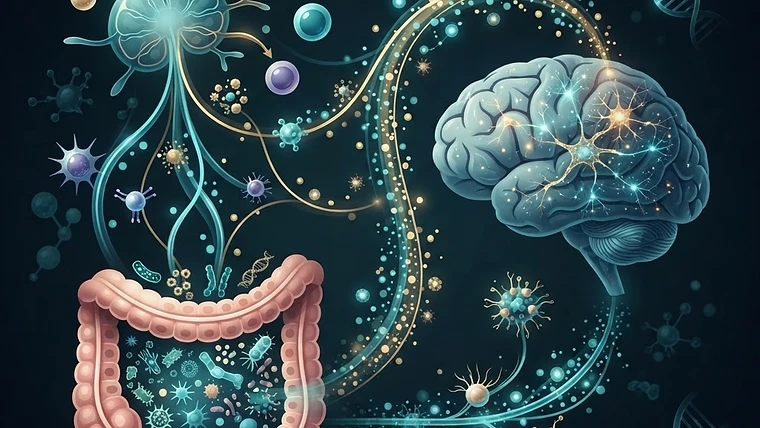
Perhaps the most compelling area of recent study is the gut-brain axis—a bidirectional communication network linking the intestinal microbiome to the central nervous system [2, 4]. We now understand that the gut is not just for digestion; it is a primary site of immune signaling [4].
When parasites disrupt the gut ecology, they alter the production of microbial metabolites, such as short-chain fatty acids, and trigger inflammatory cascades [2, 4]. This disruption can manifest as neuroinflammation [8]. Emerging studies suggest that this peripheral inflammation can cross the blood-brain barrier or influence the brain via the vagus nerve, potentially contributing to symptoms of anxiety, depression, and cognitive fog [2, 4, 6]. The correlation between high-pathogen environments and the prevalence of mood disorders is a subject of increasing scientific scrutiny, suggesting that the immune system's response to infection may be a critical, yet overlooked, factor in mental health [7, 10].
Metabolic Health and the Inflammatory Link
Beyond mental health, the metabolic implications of chronic parasitic presence are profound. Metabolic syndrome and insulin resistance are increasingly recognized as inflammatory conditions. Research into the prevalence of intestinal parasites in diabetic populations has sparked interest in how these organisms might interfere with host metabolism [9].
By altering nutrient absorption and driving systemic inflammation, parasites may exacerbate the metabolic dysregulation seen in conditions like diabetes [9]. The constant demand on the immune system to manage these infections can shift the body’s metabolic priorities, potentially impacting insulin sensitivity and glucose regulation [9]. While this field is still in its infancy, the hypothesis that parasitic-driven inflammation acts as a metabolic stressor is gaining traction among researchers looking for the "missing links" in chronic disease [9].
Navigating the Complexity of Chronic Inflammation
It is important to approach this topic with scientific nuance. The relationship between parasites, the immune system, and chronic disease is not a simple cause-and-effect chain. It is a complex, multi-factorial web. Factors such as host genetics, the specific species of the parasite, and the overall state of the microbiome all play a role in how an infection manifests [2, 8].
As we continue to explore these connections, it becomes clear that our understanding of "health" must expand to include the hidden biological actors that influence our internal environment. For those seeking to understand these mechanisms in greater detail, the work of James Young, RN, in The Parasite-Disease Connection provides a comprehensive look at how these biological interactions may influence long-term wellness.
Conclusion
While the science is still evolving, the intersection of parasitology, immunology, and metabolic health offers a promising frontier for understanding chronic illness. By viewing the body as an integrated system where even the smallest organisms can have outsized effects on our mental and metabolic state, we open the door to more holistic approaches to health. As research progresses, we may find that addressing the root causes of systemic inflammation is the key to unlocking better health outcomes for millions.
Frequently Asked Questions
Can parasites really affect my mood or mental health?
Research suggests that chronic immune activation and neuroinflammation, which can be triggered by parasitic infections, are linked to symptoms of anxiety, depression, and cognitive changes [2, 7, 8].
How do parasites influence metabolic conditions like diabetes?
Studies indicate that intestinal parasites can cause systemic inflammation and disrupt nutrient absorption, both of which are factors that may contribute to metabolic dysregulation and insulin resistance [9].
What is the gut-brain axis and why does it matter?
It is a communication network between the gut and the brain. When parasites disrupt the gut microbiome, they can trigger immune signals that lead to neuroinflammation, potentially impacting brain function and mood [2, 4].
Is this a new area of medical research?
While the study of parasites is ancient, the specific focus on how they act as subtle modulators of the immune system and their role in non-communicable diseases like diabetes and depression is a rapidly growing field of modern research [2, 4, 8].
Frequently asked questions
Can parasites really affect my mood or mental health?
Research suggests that chronic immune activation and neuroinflammation, which can be triggered by parasitic infections, are linked to symptoms of anxiety, depression, and cognitive changes.
How do parasites influence metabolic conditions like diabetes?
Studies indicate that intestinal parasites can cause systemic inflammation and disrupt nutrient absorption, both of which are factors that may contribute to metabolic dysregulation and insulin resistance.
What is the gut-brain axis and why does it matter?
It is a communication network between the gut and the brain. When parasites disrupt the gut microbiome, they can trigger immune signals that lead to neuroinflammation, potentially impacting brain function and mood.
Is this a new area of medical research?
While the study of parasites is ancient, the specific focus on how they act as subtle modulators of the immune system and their role in non-communicable diseases like diabetes and depression is a rapidly growing field of modern research.