Parasites, Inflammation, and the Hidden Metabolic Connection
Explore the emerging science behind how parasitic interactions, chronic inflammation, and the gut-brain axis may influence metabolic and mental health.
Evidence context
This article is an educational research review. Associations do not prove causation, and medical decisions should be made with qualified healthcare professionals using the underlying cited evidence.
Topic overview
Cancer and parasites research overviewThe Invisible Web: Parasites and Metabolic Health
In the landscape of modern health, we often view metabolic and mental conditions—like type 2 diabetes, anxiety, and cognitive fog—as isolated issues. However, emerging research suggests a more interconnected reality. Scientists are increasingly looking at the role of the immune system, chronic inflammation, and the gut-brain axis to understand why these conditions are rising. Among the most intriguing, yet under-discussed, factors in this complex web are parasitic organisms.
While we often associate parasites with acute tropical diseases, the science of immunometabolism is revealing that these organisms—and our immune response to them—may play a far more nuanced role in our long-term health than previously understood.
The Immune System as a Metabolic Regulator
To understand the connection, we must first look at the immune system. Chronic, low-grade inflammation is a hallmark of metabolic syndrome and type 2 diabetes. In a healthy state, our immune system maintains a delicate balance. However, when this balance is disrupted, it can lead to insulin resistance and systemic metabolic dysfunction.
Research suggests that certain helminths (parasitic worms) have evolved to manipulate the host immune system to ensure their own survival. By inducing a specific type of immune response—often a Th2-biased response—these organisms can dampen excessive inflammation. Some studies indicate that this modulation might, in specific contexts, improve insulin sensitivity and glucose homeostasis. This has led researchers to explore whether the mechanisms used by these organisms could offer insights into managing the chronic inflammation that fuels metabolic disease.
The Gut-Brain Axis and Mental Well-being
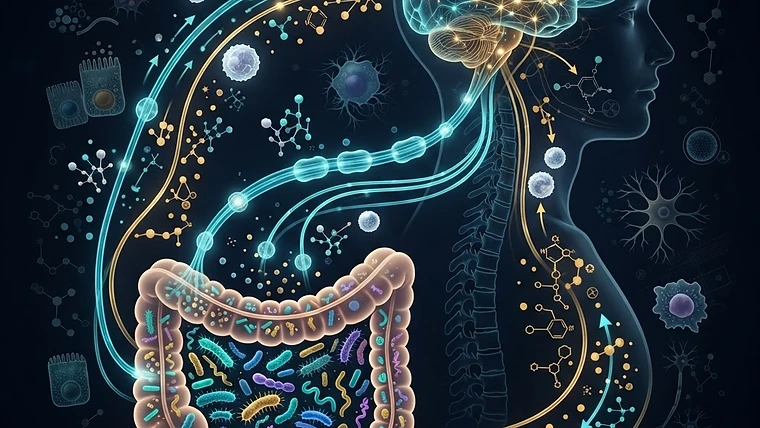
Beyond metabolism, the gut-brain axis serves as a critical communication highway. We now know that the gut microbiota influences neurotransmitter production, such as serotonin and dopamine, which are essential for mood regulation. When the gut environment is altered—whether by diet, stress, or the presence of enteric organisms—it can trigger a cascade of effects that reach the brain.
Emerging science explores how parasite-induced gut dysbiosis might contribute to neuroinflammation. When the gut barrier is compromised, inflammatory signals can travel to the central nervous system, potentially influencing cognitive function and mood. This "parasite-induced modulation" of the gut-brain axis is a growing field of study, helping researchers understand how systemic immune activation might manifest as anxiety, depression, or "brain fog."
Complexity: Not All Interactions Are Equal
It is vital to approach this topic with scientific nuance. While some research highlights the potential for helminth-derived molecules to mitigate inflammation, other studies show that certain parasites can exacerbate metabolic disorders. For instance, in models of obesity, some infections have been shown to increase tissue parasitism and worsen inflammatory markers, leading to poorer outcomes.
This duality highlights that the impact of a parasite is highly dependent on the species, the host's metabolic state, and the timing of the infection. The interaction is not a simple "good or bad" binary; it is a complex biological crosstalk that researchers are only beginning to map.
Looking Deeper: The Role of Chronic Inflammation
At the heart of these conditions—diabetes, metabolic syndrome, and even mood disorders—is the concept of chronic, low-grade inflammation. Whether triggered by metabolic stress, dietary factors, or the presence of foreign organisms, the body’s persistent attempt to resolve this inflammation can lead to tissue damage and metabolic dysregulation.
Understanding these pathways is essential for the future of health research. By studying how the immune system responds to various stressors, scientists hope to identify new targets for supporting metabolic and mental health. For those interested in exploring these connections further, the book The Parasite-Disease Connection by James Young, RN, provides a comprehensive look at how these biological systems interact and influence overall wellness.
Conclusion
As we continue to unravel the mysteries of the human microbiome and the immune system, the role of parasites remains a fascinating frontier. While we are far from having all the answers, the evidence suggests that our metabolic and mental health are deeply tied to the state of our internal ecosystem. By maintaining a curious and evidence-based perspective, we can better understand the hidden factors that influence our vitality.
Frequently Asked Questions
Can parasites cause diabetes?
Research does not suggest that parasites "cause" diabetes in a direct sense. However, studies indicate that parasitic infections can alter metabolic pathways, insulin sensitivity, and systemic inflammation, which are key factors in the development of metabolic syndrome and type 2 diabetes.
How does the gut-brain axis relate to anxiety and depression?
The gut-brain axis is a bidirectional communication network. When the gut environment is disrupted, it can affect the production of neurotransmitters and trigger systemic inflammation, which may influence mood, anxiety levels, and cognitive clarity.
Is there a link between chronic inflammation and metabolic health?
Yes. Chronic, low-grade inflammation is a well-documented driver of metabolic syndrome, insulin resistance, and type 2 diabetes. It is often considered the underlying mechanism that connects various metabolic dysfunctions.
Are all parasitic infections harmful to metabolic health?
Not necessarily. While many infections are detrimental, some research explores how specific helminth-derived molecules might modulate the immune system to reduce inflammation. However, this is a complex area of study, and outcomes vary significantly based on the parasite species and the host's health status.
Frequently asked questions
Can parasites cause diabetes?
Research does not suggest that parasites "cause" diabetes in a direct sense. However, studies indicate that parasitic infections can alter metabolic pathways, insulin sensitivity, and systemic inflammation, which are key factors in the development of metabolic syndrome and type 2 diabetes.
How does the gut-brain axis relate to anxiety and depression?
The gut-brain axis is a bidirectional communication network. When the gut environment is disrupted, it can affect the production of neurotransmitters and trigger systemic inflammation, which may influence mood, anxiety levels, and cognitive clarity.
Is there a link between chronic inflammation and metabolic health?
Yes. Chronic, low-grade inflammation is a well-documented driver of metabolic syndrome, insulin resistance, and type 2 diabetes. It is often considered the underlying mechanism that connects various metabolic dysfunctions.
Are all parasitic infections harmful to metabolic health?
Not necessarily. While many infections are detrimental, some research explores how specific helminth-derived molecules might modulate the immune system to reduce inflammation. However, this is a complex area of study, and outcomes vary significantly based on the parasite species and the host's health status.