Parasites, Inflammation, and the Hidden Roots of Metabolic Health
Explore the emerging science connecting parasitic interactions, chronic inflammation, and the gut-brain axis to metabolic and mental health conditions.
Evidence context
This article is an educational research review. Associations do not prove causation, and medical decisions should be made with qualified healthcare professionals using the underlying cited evidence.
Topic overview
Cancer and parasites research overviewParasites, Inflammation, and the Hidden Roots of Metabolic Health
In the modern landscape of health, we often view our bodies as isolated systems. We treat diabetes with glucose management, anxiety with neurotransmitter support, and autoimmune conditions with immune suppression. Yet, emerging research is increasingly pointing toward a more interconnected reality: the complex, ancient relationship between the human host, the microbiome, and the parasitic organisms that have co-evolved with us for millennia.
As we explore the intersection of parasites, inflammation, and the immune system, we find a fascinating, albeit complex, scientific frontier. Could the chronic, low-grade inflammation driving metabolic and mental health conditions be linked to the delicate balance of our internal ecosystem?
The Gut-Brain Axis and Chronic Inflammation
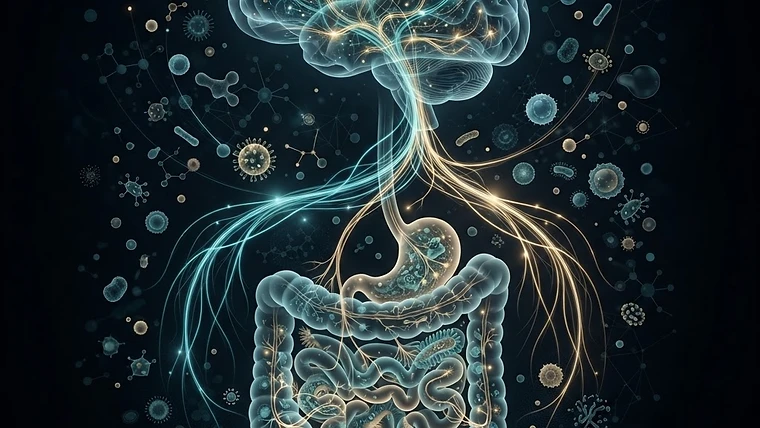
The gut-brain axis is a bidirectional communication network linking the enteric nervous system with the central nervous system. Research suggests that parasitic infections—even those that are subclinical—can act as long-term influences on this axis [1]. By modulating the gut environment, these organisms may influence systemic immune responses, potentially contributing to neuroinflammation [8].
Neuroinflammation is increasingly recognized as a common denominator in mood disorders, including anxiety and depression [1]. When the gut barrier is compromised or the microbiome is shifted, pro-inflammatory cytokines can enter systemic circulation, eventually impacting brain function [1]. This "infection-immunity-brain" axis suggests that our mental state may be more deeply rooted in our physiological environment than previously understood.
Parasites and Metabolic Syndrome: A Paradoxical Relationship
Perhaps one of the most counterintuitive areas of current research is the role of helminths (parasitic worms) in metabolic health. While we typically associate parasites with disease, some studies indicate that certain helminths may actually help modulate the immune system in ways that improve insulin sensitivity [4, 7].
In the context of obesity and type 2 diabetes, the body often exists in a state of chronic, low-grade inflammation driven by stressed adipocytes [2, 10]. This metabolic inflammation leads to insulin resistance. Interestingly, some research suggests that helminth-derived molecules can promote the polarization of macrophages toward an "M2" (anti-inflammatory) phenotype, which may help dampen this systemic inflammation [5, 9]. A landmark clinical trial even observed that hookworm infection was associated with improved insulin resistance in individuals at risk for type 2 diabetes, highlighting the potential for these organisms to influence metabolic pathways [7].
Immune Dysregulation and the Modern Condition
Why would an organism that has evolved alongside humans have such a profound impact on our metabolism? The answer likely lies in the evolutionary "arms race" between host and parasite. To survive, parasites have developed sophisticated mechanisms to regulate the host's immune system, often by inducing a type-2 immune response that prevents the host from mounting an overly aggressive inflammatory attack [9].
In our modern, sterile environments, our immune systems may be "bored" or dysregulated, leading to the rise of autoimmune conditions and chronic inflammation. The presence—or absence—of these ancient biological partners may play a role in how our immune system calibrates itself. When this calibration is off, we see the emergence of metabolic syndrome, cognitive fog, and persistent mood disorders [1, 5].
Navigating the Complexity
It is vital to approach this science with nuance. Not all parasitic interactions are beneficial; the impact of an infection depends heavily on the species, the stage of infection, and the host's unique physiological state [9]. While some helminths may offer protective metabolic effects, other parasites can exacerbate inflammation or contribute to organ-specific damage [3, 9].
This field of study is still in its infancy. We are moving away from a binary view of "parasite as enemy" toward a more sophisticated understanding of "parasite as a biological modulator." As we continue to map these interactions, we gain a clearer picture of how the gut-brain axis, immune regulation, and metabolic health are inextricably linked.
For those interested in a deeper exploration of these biological connections, the book The Parasite-Disease Connection by James Young, RN, provides a comprehensive look at how these hidden factors may influence our overall well-being, serving as a valuable resource for those seeking to understand the broader context of human health.
Conclusion
The science of the parasite-host relationship is a reminder that we are not just individuals, but ecosystems. By investigating the roots of chronic inflammation and the mechanisms of the gut-brain axis, we may eventually find new ways to support metabolic and mental health. As research progresses, we remain curious about how these ancient biological dialogues continue to shape our modern health outcomes.
Frequently Asked Questions
Can parasites actually improve metabolic health?
Some research suggests that certain helminth infections may help reduce systemic inflammation and improve insulin sensitivity in specific contexts, though this is an area of active, ongoing study rather than a clinical recommendation [4, 7].
How do parasites influence anxiety and depression?
Parasites may influence mental health through the gut-brain axis by triggering chronic immune activation and neuroinflammation, which are linked to mood disorders [1, 8].
What is the link between inflammation and diabetes?
Chronic, low-grade inflammation, often originating from adipose tissue, is a primary driver of insulin resistance and the development of type 2 diabetes [2, 10].
Is it possible to have a parasite and not know it?
Yes, many parasitic infections can be subclinical or latent, meaning they may persist in the body without causing overt symptoms while still exerting subtle, long-term effects on the immune system and metabolism [1, 4].
Frequently asked questions
Can parasites actually improve metabolic health?
Some research suggests that certain helminth infections may help reduce systemic inflammation and improve insulin sensitivity in specific contexts, though this is an area of active, ongoing study rather than a clinical recommendation.
How do parasites influence anxiety and depression?
Parasites may influence mental health through the gut-brain axis by triggering chronic immune activation and neuroinflammation, which are linked to mood disorders.
What is the link between inflammation and diabetes?
Chronic, low-grade inflammation, often originating from adipose tissue, is a primary driver of insulin resistance and the development of type 2 diabetes.
Is it possible to have a parasite and not know it?
Yes, many parasitic infections can be subclinical or latent, meaning they may persist in the body without causing overt symptoms while still exerting subtle, long-term effects on the immune system and metabolism.