Parasites, Inflammation, and the Hidden Gut-Brain Connection
Explore the emerging science linking parasitic activity, chronic inflammation, and the gut-brain axis to metabolic and mental health conditions.
Evidence context
This article is an educational research review. Associations do not prove causation, and medical decisions should be made with qualified healthcare professionals using the underlying cited evidence.
Topic overview
Cancer and parasites research overviewThe Hidden Dialogue: Parasites and Human Health
For decades, the scientific community viewed parasites primarily as pathogens to be eradicated. However, a fascinating shift is occurring in the world of immunometabolism and microbial endocrinology. Researchers are now exploring a more nuanced reality: the complex, often invisible, dialogue between parasitic organisms, the human immune system, and our metabolic and mental health. As we uncover the mechanisms of the gut-brain axis, we are beginning to ask: how do these ancient organisms influence the modern epidemic of chronic inflammation, metabolic syndrome, and mood disorders?
The Gut-Brain Axis and Neuroinflammation
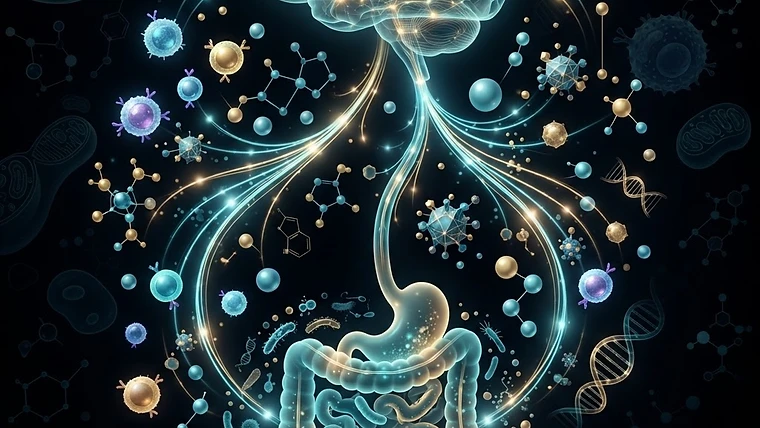
At the heart of this exploration is the microbiota-gut-brain axis. This bidirectional communication network links the gastrointestinal tract to the central nervous system via immune, neuroendocrine, and neural pathways. Emerging research suggests that parasitic infections—whether protozoan or helminth—can act as long-term influences on this environment.
When the gut environment is altered, it can trigger systemic immune activation. This often involves the release of pro-inflammatory cytokines, which can cross the blood-brain barrier. This process, known as neuroinflammation, is increasingly being studied for its potential role in cognitive fog, anxiety, and depression. While human evidence remains heterogeneous, the mechanistic framework suggests that chronic immune activation, driven by gut dysbiosis, may be a significant factor in how our bodies regulate mood and behavior.
Metabolic Health: A Paradoxical Relationship
Perhaps the most surprising area of research involves the relationship between parasitic helminths (worms) and metabolic health. While we typically associate infection with illness, some studies indicate that certain helminths may actually modulate the host's immune system in ways that improve insulin sensitivity and glucose metabolism.
In obesity-related metabolic syndrome, the body often suffers from sustained, low-grade chronic inflammation originating in adipose tissue. Research has shown that some helminth infections can shift the immune response toward a Th2-dominant profile, which may help dampen this systemic inflammation. Clinical trials have even explored whether these interactions could offer insights into managing insulin resistance, suggesting that the immune-modulating properties of these organisms might one day inform new therapeutic strategies for metabolic disorders.
Inflammation as a Common Denominator
Whether we are discussing diabetes, anxiety, or autoimmune conditions, chronic inflammation is the common denominator. The immune system is designed to protect us, but when it remains in a state of constant, low-level activation, it can lead to tissue damage and metabolic dysfunction.
Parasites, by their very nature, must interact with the host's immune system to survive. Some species have evolved to suppress or redirect immune responses to avoid detection. This "crosstalk" between the parasite and the host's immune cells—such as the polarization of macrophages—is a subject of intense study. By understanding how these organisms influence the host's inflammatory state, scientists hope to better understand the underlying drivers of modern metabolic and mental health challenges.
Navigating the Complexity
It is important to emphasize that this field is in its infancy. While the potential for new discoveries is vast, the relationship between parasites and human health is highly context-dependent. Factors such as the specific parasite species, the host's genetic background, the state of the microbiome, and the duration of the infection all play critical roles in determining whether the outcome is harmful or potentially regulatory.
We are not suggesting that parasitic infection is a solution to modern disease. Rather, we are highlighting a growing body of research that views these organisms as powerful biological tools that can help us map the intricate pathways of the human immune system. By studying these interactions, we gain a clearer picture of how our internal environment dictates our external health.
For those interested in a deeper dive into the historical and biological context of these interactions, the book The Parasite-Disease Connection by James Young, RN, provides a comprehensive look at how these ancient biological relationships continue to shape our understanding of chronic illness today.
Conclusion
The intersection of parasitology, immunology, and metabolic health is one of the most exciting frontiers in modern science. As we continue to peel back the layers of the gut-brain axis and the mechanisms of systemic inflammation, we move closer to understanding the root causes of conditions that have long puzzled clinicians. While we must remain cautious and rely on rigorous, peer-reviewed research, the potential for these insights to transform our approach to health is profound.
Frequently Asked Questions
Can parasites cause anxiety and depression?
Research suggests that chronic immune activation and neuroinflammation, which can be triggered by gut dysbiosis and parasitic presence, are linked to mood disorders. However, human evidence is still evolving and varies by individual and context.
Is there a link between parasites and diabetes?
Some studies indicate that certain helminth infections may improve insulin sensitivity and reduce inflammation in metabolic tissues, though this is a complex area of research and not a recommended treatment for diabetes.
What is the gut-brain axis?
It is a bidirectional communication network that links the gastrointestinal tract to the brain. It involves the immune system, the nervous system, and the microbiome, all of which can be influenced by external factors like parasitic infections.
Does chronic inflammation affect metabolic health?
Yes, sustained low-grade systemic inflammation is a hallmark of metabolic syndrome and type 2 diabetes. It often originates in adipose tissue and can impair the body's ability to regulate glucose and insulin effectively.
Frequently asked questions
Can parasites cause anxiety and depression?
Research suggests that chronic immune activation and neuroinflammation, which can be triggered by gut dysbiosis and parasitic presence, are linked to mood disorders. However, human evidence is still evolving and varies by individual and context.
Is there a link between parasites and diabetes?
Some studies indicate that certain helminth infections may improve insulin sensitivity and reduce inflammation in metabolic tissues, though this is a complex area of research and not a recommended treatment for diabetes.
What is the gut-brain axis?
It is a bidirectional communication network that links the gastrointestinal tract to the brain. It involves the immune system, the nervous system, and the microbiome, all of which can be influenced by external factors like parasitic infections.
Does chronic inflammation affect metabolic health?
Yes, sustained low-grade systemic inflammation is a hallmark of metabolic syndrome and type 2 diabetes. It often originates in adipose tissue and can impair the body's ability to regulate glucose and insulin effectively.