Exploring the Link Between Rectal Cancer and Parasites
Could there be an underlying connection between chronic infections and colorectal health? We examine the emerging research on rectal cancer and parasites.
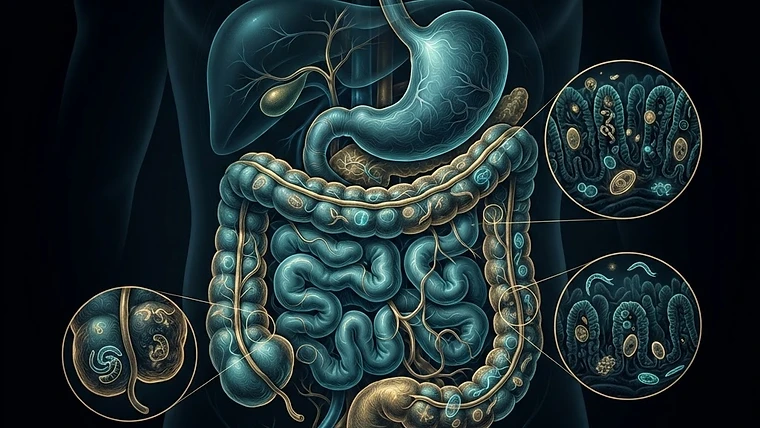
Evidence context
This article is an educational research review. Associations do not prove causation, and medical decisions should be made with qualified healthcare professionals using the underlying cited evidence.
Topic overview
Cancer and parasites research overviewMedical Disclaimer: The following information is for educational purposes only and does not constitute medical advice, diagnosis, or treatment. Always seek the advice of your physician or other qualified health provider with any questions you may have regarding a medical condition. Never disregard professional medical advice or delay in seeking it because of something you have read here.
The Intersection of Digestive Health and Parasitology
The landscape of oncology is continuously evolving as researchers seek to understand the multifaceted nature of disease development. One area that has garnered intermittent interest over the decades is the relationship between persistent gastrointestinal infections and cellular changes within the bowel. Specifically, the search for a link between rectal cancer and parasites remains a niche but intriguing field of study for those interested in the role of the microbiome and chronic inflammation.
While traditional oncology focuses heavily on genetic mutations and environmental factors like diet and lifestyle, emerging science explores how the presence of external organisms might influence the internal environment of the colon and rectum. Understanding these potential variables requires a look at how long-term parasitic colonization could potentially alter local tissue environments.
Chronic Inflammation and Tissue Integrity
One of the primary hypotheses regarding the relationship between rectal cancer and parasites is the role of chronic inflammation. Parasites that inhabit the gastrointestinal tract, such as certain protozoa or helminths, can cause localized irritation as they attach to or migrate through the mucosal lining of the bowel.
Studies have suggested that persistent inflammation can lead to repeated cycles of tissue damage and cellular repair. In biological models, this process of chronic irritation may theoretically create a microenvironment where cells are forced to undergo accelerated division. Some researchers theorize that this stress, when sustained over many years, could potentially facilitate the development of abnormal cellular growth, though further clinical evidence is required to establish a direct causal path.
Investigating Potential Mechanisms
When researchers examine rectal cancer and parasites, they often focus on several key mechanisms:
- Alteration of the gut microbiome: Parasitic presence can shift the balance of bacteria in the colon, potentially impacting metabolic processes.
- Direct mechanical irritation: The physical presence of certain organisms can disrupt the epithelial barrier of the rectum.
- Immune system modulation: Chronic immune activation in response to a persistent parasite may redirect resources or create an environment of systemic inflammation.
- Metabolic disruption: Parasites may consume or produce metabolites that alter the cellular signaling pathways of the host.
These factors, while individually documented in various parasitic infections, are currently being scrutinized for their potential cumulative effect on colorectal health. It is essential to note that the presence of an organism does not automatically trigger disease, but rather, scientists are investigating whether these factors act as potential contributors within a broader, complex web of causality.
The Complexity of Standard Care and Parasitic Co-Factors
Patients facing a diagnosis of rectal cancer are typically offered a standard suite of interventions, including chemotherapy, radiation therapy, and surgical resection. It is important to acknowledge that these standard modalities are designed to address malignant cells by disrupting their ability to divide. However, it is also well-documented that these powerful treatments can impact healthy cells and tissues, often leading to a range of systemic side effects.
In the context of the potential research regarding rectal cancer and parasites, patients often ask how these might intersect with their treatment plans. The oncology team must manage the tumor environment, and they are the primary source of guidance on how to navigate these treatments. When discussing options, it is helpful to ask about the potential for co-occurring infections and how they might affect the overall treatment strategy. Patients should maintain open lines of communication with their medical team regarding all aspects of their physical health, including concerns about chronic infections.
Looking at the Evidence
While epidemiological studies have shown varying degrees of correlation between certain intestinal infections and colorectal conditions, the data is rarely straightforward. Geography, diet, sanitation, and genetics all play massive roles, making it difficult to isolate the role of a single parasite.
Some studies indicate that in regions where specific parasitic infections are endemic, there may be a corresponding rise in inflammatory bowel conditions. Whether this translates into a higher incidence of rectal cancer remains a topic of active investigation. The scientific community continues to employ more advanced diagnostic tools, such as metagenomic sequencing, to better identify the presence of these organisms, which may help clarify the picture in the coming years.
A Cautious Approach to Future Discovery
The relationship between rectal cancer and parasites is complex and should be approached with both curiosity and scientific rigor. We must avoid oversimplification; cancer is rarely the result of a single "cause" but rather the convergence of multiple internal and external stressors.
As research continues, the focus will likely remain on early detection and understanding the underlying biological triggers that allow abnormal growths to persist. By continuing to investigate these subtle environmental factors, the medical community may eventually gain a more complete understanding of how our long-term guests—the microorganisms we harbor—interact with our most fundamental cellular processes.
Going deeper
For those who wish to explore the nuances of this subject further, it is helpful to consult evidence-based resources that contextualize modern research. You can find more detailed information by visiting the main cancer and parasites guide. Additionally, for a comprehensive overview of how these organisms may impact overall health and well-being, the book "The Parasite-Cancer Connection" by James Young, RN, serves as a valuable resource for those looking to deepen their understanding of this intersection.
Frequently asked questions
Can parasites directly cause rectal cancer?
Current research suggests a potential association between chronic parasitic infection and increased inflammation in the bowel, but there is no definitive proof that parasites are a direct cause of rectal cancer.
Should I be tested for parasites if I have been diagnosed with rectal cancer?
If you have concerns about co-occurring infections, you should discuss this with your oncology team. They can determine if diagnostic testing is appropriate based on your specific clinical presentation.
How do parasites affect the efficacy of cancer treatments?
There is limited data on how specific parasitic infections impact the efficacy of chemotherapy or radiation. Ongoing research is investigating whether the gut microbiome and parasitic load might influence systemic health during treatment.
Are there symptoms of rectal cancer that mimic parasitic infections?
Yes, symptoms such as abdominal pain, changes in bowel habits, and unexplained weight loss can overlap, which is why a thorough medical evaluation is necessary to reach an accurate diagnosis.