Stomach Cancer and Parasites: Exploring Emerging Research
Could microscopic organisms play a role in digestive health? We examine the evolving science surrounding the link between stomach cancer and parasites.
Evidence context
This article is an educational research review. Associations do not prove causation, and medical decisions should be made with qualified healthcare professionals using the underlying cited evidence.
Topic overview
Cancer and parasites research overviewUnderstanding the Complex Landscape of Stomach Health
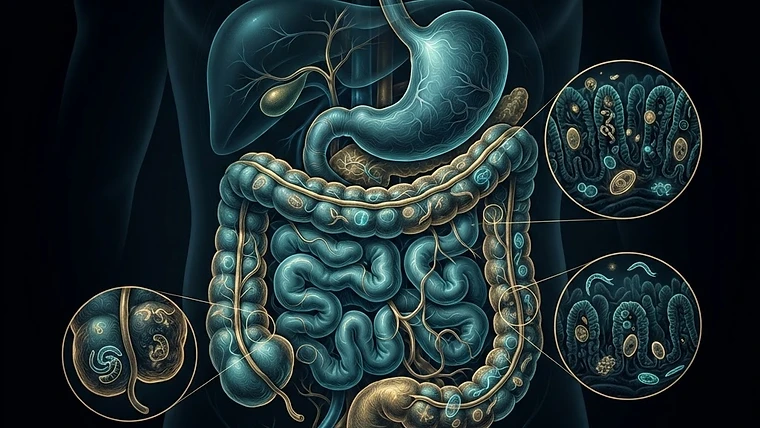
In recent years, the scientific community has increasingly turned its attention toward the microscopic world living within our digestive systems. While standard oncology often focuses on genetics and environmental triggers, emerging research is beginning to look at the intersection of stomach cancer and parasites. This exploration is not about establishing direct causation, but rather about understanding how our biological environment influences complex disease processes.
It is important to emphasize that this article is for educational purposes only and does not constitute medical advice. Readers should always consult with their primary care physician or oncology team regarding any health concerns or before making changes to their health management protocols.
The Intersection of Gastric Pathogens and Cellular Health
When we discuss stomach cancer and parasites, we are entering a field known as infectious oncology. Traditionally, the focus of gastric research has been on bacteria, specifically Helicobacter pylori (H. pylori). H. pylori is well-recognized for its ability to induce chronic inflammation, which is a known risk factor for gastric cellular changes. However, parasitologists are now asking whether other organisms—specifically helminths and protozoa—might create similar inflammatory environments.
Chronic inflammation is a significant area of study. When the lining of the stomach is under constant stress from either external pathogens or the host's immune response to those pathogens, the environment becomes ripe for cellular adaptation. Research into stomach cancer and parasites focuses on whether these organisms trigger immune pathways that eventually lead to the loss of homeostatic control in healthy tissues.
Potential Mechanisms of Influence
How might these organisms influence gastric tissues? Researchers looking at the link between stomach cancer and parasites often point to several potential mechanisms:
- Chronic Inflammation: Sustained immune activation can lead to tissue damage and subsequent repair cycles, which may increase the risk of replication errors in cells.
- Microbiome Alteration: The presence of parasites can shift the balance of the gut flora, potentially favoring the growth of opportunistic bacteria.
- Nutrient Competition: Certain organisms absorb nutrients intended for the host, potentially weakening the immune system's ability to monitor for aberrant cell growth.
- Immunomodulation: Some parasites are adept at suppressing or 'tricking' the immune system, potentially preventing it from identifying and destroying early-stage abnormal cells.
It is essential to note that these mechanisms remain under investigation. Scientific studies often show correlations in specific populations, but the leap from correlation to causation remains a significant hurdle in the field of oncological research.
Standard Medical Care and the Role of Oncology
When discussing advanced stomach health issues, we must acknowledge the current standard of care. Standard interventions, including chemotherapy, radiation, and surgical resection, are designed to address malignant growth. These treatments are intensive and often affect both healthy and diseased cells. Patients facing these protocols are encouraged to engage in detailed discussions with their oncology team regarding the specific trade-offs, potential side effects, and the goals of their individualized treatment plans. Emerging research into biological factors does not replace these established clinical procedures; rather, it represents a growing area of study that may one day offer a more comprehensive understanding of why certain gastric conditions develop.
Investigating the Evidence Base
As interest in stomach cancer and parasites grows, many studies are being revisited. Some historical data suggests that high rates of parasitic infections in certain geographical regions overlap with higher incidences of gastric conditions. However, confounding factors such as diet, smoking, genetics, and exposure to other environmental toxins must be carefully controlled for. The complexity of the human gut makes it difficult to isolate the effect of one pathogen from another.
For example, studies have occasionally noted that individuals with high parasitic loads may show different levels of inflammatory markers than those without. Whether these markers are a primary driver of cancer or simply a symptom of a disrupted gut environment is the subject of ongoing debate. The goal of this research is to build a more complete picture of the human ecosystem and how external organisms might inadvertently disrupt cellular communication.
Moving Beyond the Basics
We are in a fascinating era of biological science. The realization that the stomach is not a sterile environment has changed our approach to digestive medicine entirely. We now view the stomach as a dynamic ecosystem. When we explore the relationship between stomach cancer and parasites, we are essentially asking how guests in that ecosystem impact the structure of the home they reside in.
This is not a message of alarm, but one of inquiry. By better understanding the roles of non-human organisms in our bodies, we may improve diagnostic precision or develop better supportive care strategies in the future. As with all scientific inquiry, we must remain cautious, objective, and rigorous in our assessment of emerging data.
Going Deeper
If you are interested in exploring the broader context of how microorganisms influence human health, you can find more information at the main cancer and parasites guide. For a more in-depth look at these concepts, consider reading the book "The Parasite-Cancer Connection" by James Young, RN. This work serves as an excellent resource for those looking to expand their knowledge base on the complex interactions between parasites and systemic health in a thought-provoking, educational format.
FAQ
-
Question: Can parasites directly cause stomach cancer? Answer: There is no definitive proof that parasites directly cause cancer. Research currently focuses on how chronic inflammation caused by these organisms may contribute to an environment where abnormal cells are more likely to develop.
-
Question: Should I get tested for parasites if I have stomach issues? Answer: If you have persistent gastric symptoms, you should consult a doctor to discuss standard diagnostic testing, which may include investigations into bacterial, viral, or parasitic factors depending on your medical history.
-
Question: Are parasites more common in specific types of stomach cancer? Answer: Research is ongoing, but there is no consensus linking specific parasitic species to particular types of gastric malignancy. Most research focuses on the general association between chronic irritation and cellular change.
-
Question: Is there a natural treatment to prevent stomach cancer? Answer: No, there is no evidence that any natural or alternative treatment can prevent cancer. Standard medical care, which includes screening and early detection, remains the most effective way to manage and monitor stomach health.
Frequently asked questions
Can parasites directly cause stomach cancer?
There is no definitive proof that parasites directly cause cancer. Research currently focuses on how chronic inflammation caused by these organisms may contribute to an environment where abnormal cells are more likely to develop.
Should I get tested for parasites if I have stomach issues?
If you have persistent gastric symptoms, you should consult a doctor to discuss standard diagnostic testing, which may include investigations into bacterial, viral, or parasitic factors depending on your medical history.
Are parasites more common in specific types of stomach cancer?
Research is ongoing, but there is no consensus linking specific parasitic species to particular types of gastric malignancy. Most research focuses on the general association between chronic irritation and cellular change.
Is there a natural treatment to prevent stomach cancer?
No, there is no evidence that any natural or alternative treatment can prevent cancer. Standard medical care, which includes screening and early detection, remains the most effective way to manage and monitor stomach health.