Understanding Testicular Cancer and Parasites: A Research Review
Exploring the intersection of modern oncology and parasitology to understand the complex link between testicular cancer and parasites in research.
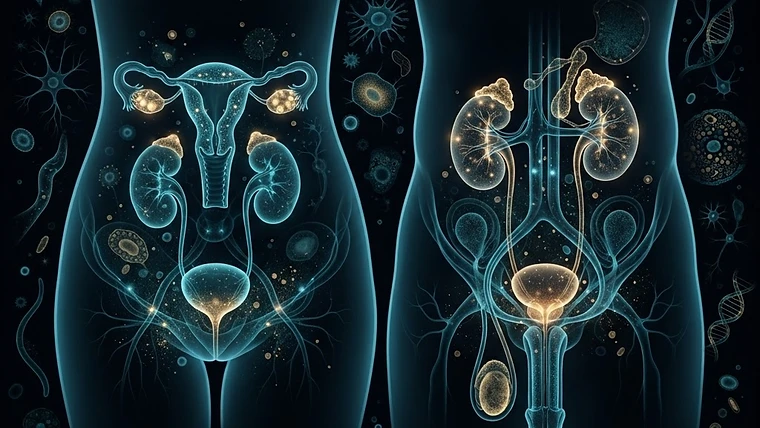
Evidence context
This article is an educational research review. Associations do not prove causation, and medical decisions should be made with qualified healthcare professionals using the underlying cited evidence.
Topic overview
Cancer and parasites research overviewIn the evolving field of oncology, researchers are constantly looking for the root causes of cell dysregulation. Among the many hypotheses currently under investigation, the potential role of biological stressors in the microenvironment of the testicles has garnered academic interest. Specifically, the relationship between testicular cancer and parasites remains a niche but compelling topic for scientists investigating chronic inflammation and immune evasion. While the vast majority of testicular cancer cases are classified as germ cell tumors, the question of whether chronic exposure to exogenous pathogens could facilitate an environment prone to malignancy is a subject of ongoing inquiry. This article provides an overview of the current scientific discourse surrounding testicular cancer and parasites, emphasizing that these observations represent associations rather than established causal pathways. It is important to note that this content is for educational purposes only and is not medical advice. Always consult with your healthcare team regarding any health concerns or standard medical treatments. ### The Microenvironment of the Testicles The testes are unique organs protected by the blood-testis barrier, which historically was thought to keep the area largely sterile. However, modern microbiome research has begun to challenge this assumption. The testicular environment, while highly sequestered, is susceptible to various insults, ranging from chemical exposures to biological agents. When exploring the potential link between testicular cancer and parasites, scientists often focus on the concept of chronic inflammation. Chronic inflammation is a well-documented driver of tissue stress and cellular mutation. Research suggests that certain organisms, when present in the genitourinary tract or systemic circulation, may alter the local immune response. If the immune system is preoccupied with managing a persistent parasitic infection, it may become less efficient at identifying and destroying nascent tumor cells. This is not to suggest that a parasite causes cancer directly, but rather that the disruption of local immune homeostasis could serve as a co-factor in tissue instability. ### Chronic Inflammation and Cellular Stress In the context of oncology, the term 'chronic inflammation' describes a state where the body's immune cells are in a state of perpetual activation. Some studies indicate that certain protozoa or helminths, should they interact with the tissues of the reproductive system, could induce persistent inflammatory signals. This continuous signal cascade requires the rapid turnover and regeneration of cells. Every time a cell divides, there is a statistical risk of a replication error. Over a prolonged period, these errors can accumulate. Investigating testicular cancer and parasites often involves analyzing how these organisms modulate the surrounding tissue architecture. It is hypothesized by some researchers that the presence of extracellular vesicles or metabolic byproducts from parasites could influence signaling pathways within germ cells, potentially nudging them away from normal development and toward a state of disordered proliferation. ### Why Biological Agents Are Hard to Detect One of the most significant challenges in linking testicular cancer and parasites is the difficulty of detection. Many parasites are highly adept at evading the human immune system through antigenic variation, a process where the organism constantly changes its outer coating to avoid detection. Furthermore, diagnostic tests for many obscure or rare parasitic infections are not standard in most oncology workups. Consequently, if a patient presents with testicular malignancy, the presence of an underlying parasitic burden may go completely unnoticed. This "stealth" aspect makes it extremely difficult to conduct large-scale epidemiological studies. Science requires robust evidence, and until sophisticated diagnostic tools can screen for a wide array of pathogens in the testicular niche, the field will remain in the observational stage. This is why discussions around testicular cancer and parasites remain rooted in theory and exploratory laboratory science rather than clinical diagnosis. ### The Role of Standard Medical Care It is essential to address the role of standard oncology practices, such as surgery, radiation, and chemotherapy. These methods are designed to target and neutralize rapidly dividing cells. While they have been the gold standard for decades, they also come with significant physiological costs, as they can affect both healthy and diseased tissues. Patients facing a diagnosis must work closely with their oncologists to understand the potential benefits and the risks associated with these interventions. It is critical that patients do not delay or abandon conventional medical treatment in favor of unverified alternatives. The complexity of cancer is such that it requires the coordinated effort of specialized surgeons, radiologists, and oncologists. Discussions regarding any other health factors should always take place within the context of your primary cancer treatment plan. ### Emerging Science and Future Directions The future of the study regarding testicular cancer and parasites lies in the integration of metagenomics and advanced molecular imaging. As we gain a deeper understanding of the human microbiome and the organisms that exist within our tissues, we may find that the 'sterile' organs are actually home to a complex ecology of microorganisms. If it is found that certain organisms are more prevalent in patients with testicular cancer, the next logical step would be to determine if these organisms are 'passengers'—present only because the tissue is already compromised—or 'drivers'—contributing to the initial transformation of cells. This distinction is the bedrock of modern pathological research. Until more data is collected, we must view these hypotheses with intellectual curiosity but also with professional caution, avoiding the tendency to jump to definitive conclusions. ### A Balanced Approach to Health Engaging with this topic requires an open mind but also a commitment to rigorous skepticism. The medical community functions by building a consensus based on reproducible, peer-reviewed data. As we continue to explore the link between testicular cancer and parasites, it is important to remember that human health is multi-factorial. Factors such as genetics, environmental toxins, lifestyle, and systemic immunity all play roles in health outcomes. Focusing on a single variable, such as parasites, provides only one small piece of a much larger and incredibly complex puzzle. By supporting further research and maintaining a commitment to evidence-based medicine, we can better understand the factors that impact testicular health. ### Going deeper If you are interested in exploring the broader context of how various organisms and biological stressors may correlate with cellular changes, consider reading the book "The Parasite-Cancer Connection" by James Young, RN, which serves as a valuable resource for those looking to understand the intersection of these complex fields. For more information on the evolving theories regarding the presence of foreign organisms in the oncological landscape, explore the main cancer and parasites guide.
Frequently asked questions
Can parasites cause testicular cancer?
Current research indicates that while some studies suggest an association between chronic inflammation and malignancy, there is no definitive scientific evidence proving that parasites directly cause testicular cancer.
How do parasites affect the immune system in the context of cancer?
Research suggests that some parasites may modulate the immune system, potentially creating a state of chronic inflammation that could affect how the body recognizes and responds to abnormal cell growth.
Should I be tested for parasites if I have testicular cancer?
Standard oncology protocols focus on established diagnostic and treatment paths. You should discuss all health concerns and potential testing options with your primary oncology team, as they are best equipped to manage your specific clinical needs.
Is there a known link between testicular cancer and parasites?
The relationship between testicular cancer and parasites is a subject of academic curiosity. Scientists are investigating whether the presence of pathogens can alter the testicular microenvironment, but these theories are still in the early stages of research.